
The Clarence Railway
At our January meeting speaker Martin Peagam’s ‘The Railway Men’ presentation included information on some of the key people involved in the development of the ‘Stockton and Darlington Railway’ which celebrates its 200th Anniversary this year – it opened on 27th September 1825 when Stephenson’s Locomotion No 1 hauled the train from Shildon to Stockton via Darlington.
Our research on Coxhoe’s Clarence Railway discovered interesting connections and strong competition between the two Railway companies.
During the development of the Stockton and Darlington Railway “the Misses Hales, who owned the lease of Coxhoe Colliery, wrote asking them to consider a connection to Coxhoe “ so that they would not put them into a state of inferiority compared to other collieries”.
The Stockton and Darlington offered to buy the lease but were outbid by Henry Blanchard of London, who gave “an enormous price on condition they should use their efforts to support the Clarence Railway Bill by reason of their numerous family connections to considerable influence”.
Race to the Sea:
The Industrial Revolution created great demand for coal and the lucrative markets were at London. The close proximity of the north east coalfields to the sea meant that there was a cheap and faster way of transporting it other than the three rivers—Tyne, Wear and Tees. The development of the steam engine replaced pack horses and instigated plans for numerous railways. New ports eg Seaham and Hartlepool were being rapidly developed.
1828 : The Clarence Railway Board was incorporated and given assent to build a line.
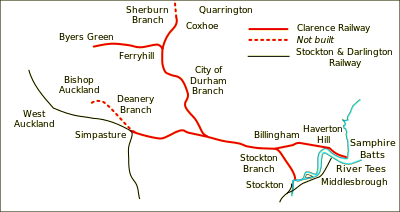
1833 : It opened in direct competition with Stockton and Darlington to carry coals to Middlesbrough (Haverton Hill).
1835 : The Clarence Railway came to Coxhoe.
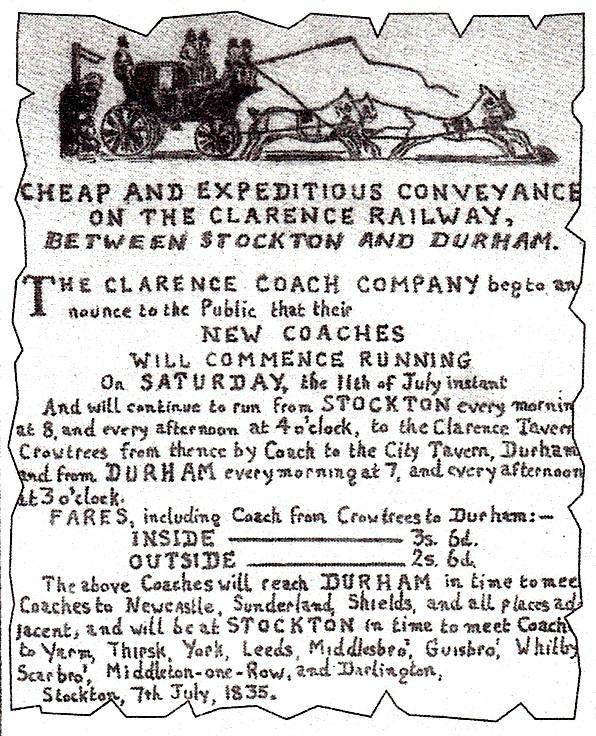
1836: Clarence Railway opens for passengers from Stockton to Durham. The train stopped at Coxhoe and passengers transferred to horse drawn carriage to Durham.
1841 : 30th November -Stockton and Darlington Railway runs a service from Darlington North Road to the Clarence Railway’s terminus at Coxhoe.
Christopher Tennant, having previously been a sailor, opted for the name of ‘The Clarence Railway” after the then Lord High Admiral of the British Navy who later became King William IV.

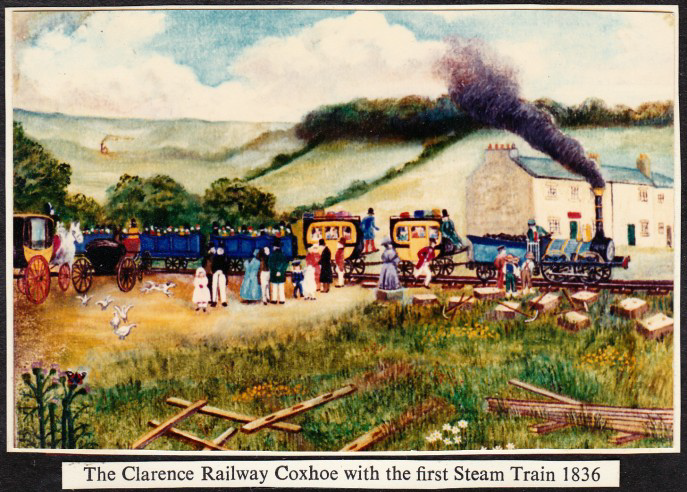
Artist Robin Walton

Michael Peacock worked for two years as a level crossing assistant gatekeeper based at Coxhoe WH Station on the Clarence Railway which was a link between Steetley’s Basic Works and Ferryhill and beyond .
The passenger service was discontinued in 1902, goods were dealt with until 1966. it was taken out of use in 1984 when Steetley closed.
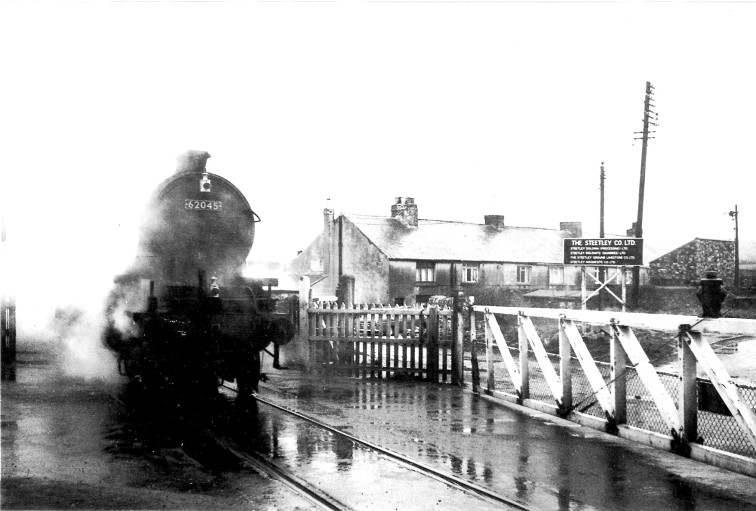
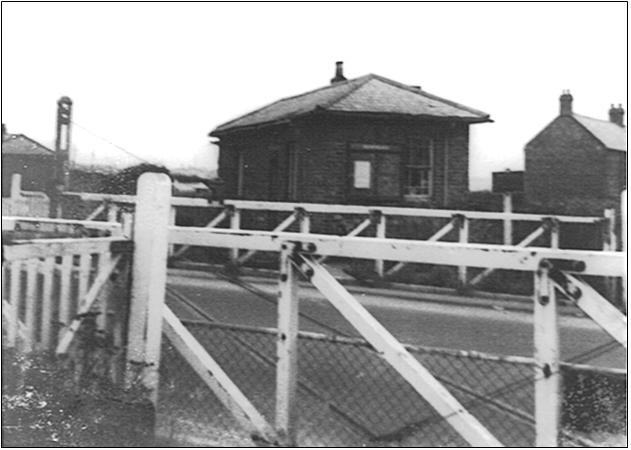

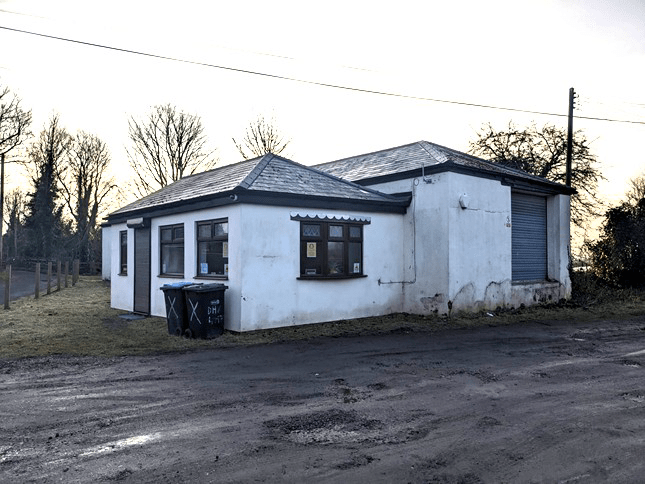
Even in the 60’s there was a fair amount of traffic between Coxhoe and Durham and a good number of buses passed that way including G & B, Scarlet Band, United (double deckers), T.M.S., A.B.C – later D.D.S. There was keen rivalry between buses and they wanted to be on time so they could collect their allocation of passengers intended for them. While every care was taken not to close the gates when motor vehicles were progressing through Coxhoe, Michael says he was particularly careful to have a good look up the bank knowing that if he delayed the buses he would incur the driver’s wrath.

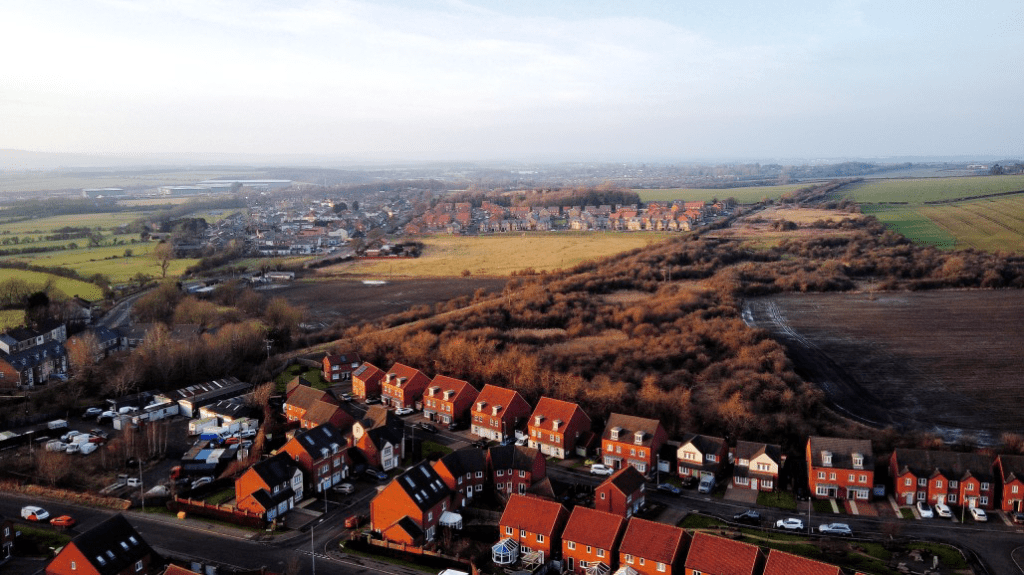
 Coxhoe Local History Group