
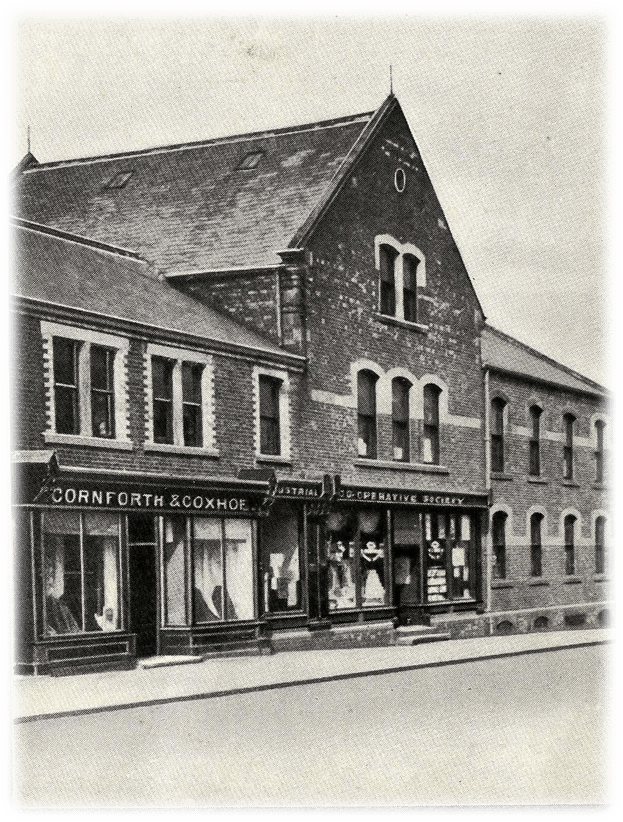
How it began.
In 1870 a group of men who worked at Tursdale Coke Ovens had heard about a Co-operation in Crook. They all met at the Brickyard at Thinford Lane, then known as “Snowden’s Cabin” where they decided to canvas the district for financial support to start a store of their own. Initially about a hundred promises were made, a third of which was kept. Each subscribed a pound each with which to buy supplies of flour, tea, sugar and butter.
Among these pioneers were the following men:-
Edward Collingwood, William Cowburn, George Swinbank, Charles Hunt, Thomas Bell, W Macdonald, Jos. Salmon, Jas Willoughby, Jno. Coates, Robert Mowbray, William Dunn, Charles Griffiths as secretary, Anthony Scorer as president.
The Co-op was formed.
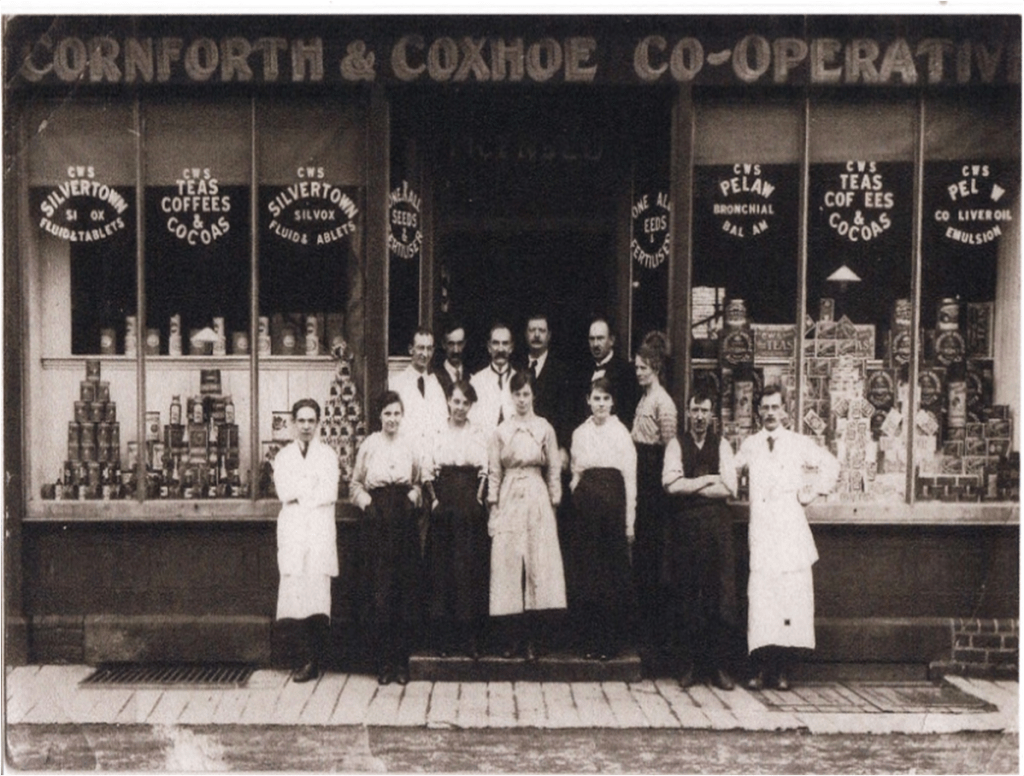
Rules were drawn up, and the society was formed and registered in November, 1870. As nearly all the originators resided in Cornforth and Cornforth Lane, they named it “The Coxhoe and Cornforth Co-operative Society Limited”.
They commenced business in a small shop belonging to Mr Berriman, adjoining the “Victoria Hotel”.
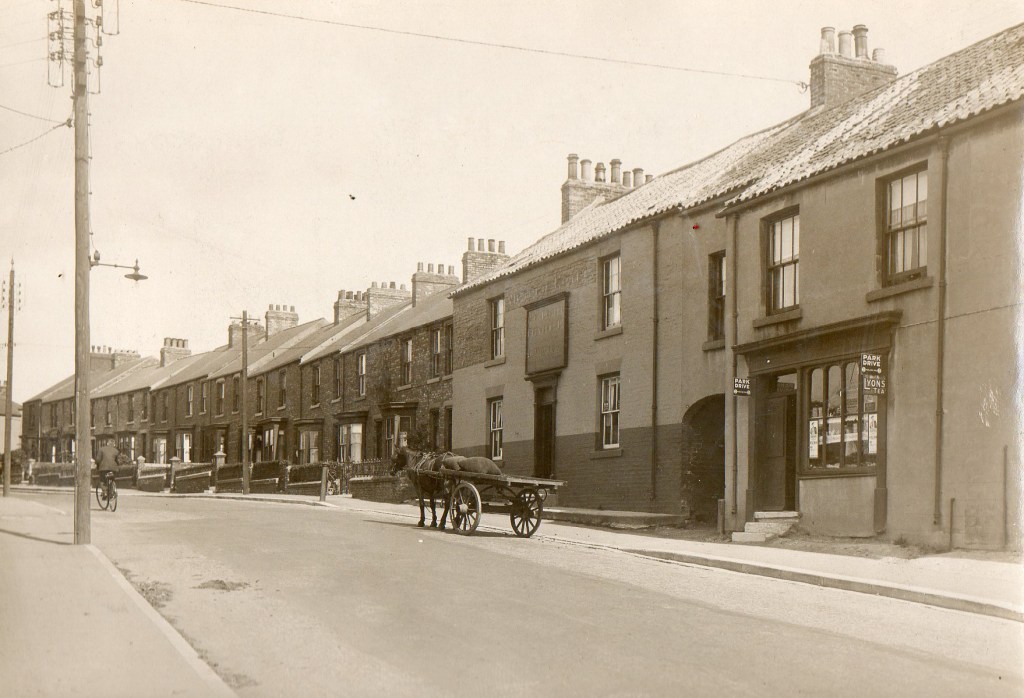
They eventually found more suitable accommodation between the “Tyneside Inn” and the “Old Red Lion”, just below the railway station, that way goods arriving by train could easily be unloaded into the store.
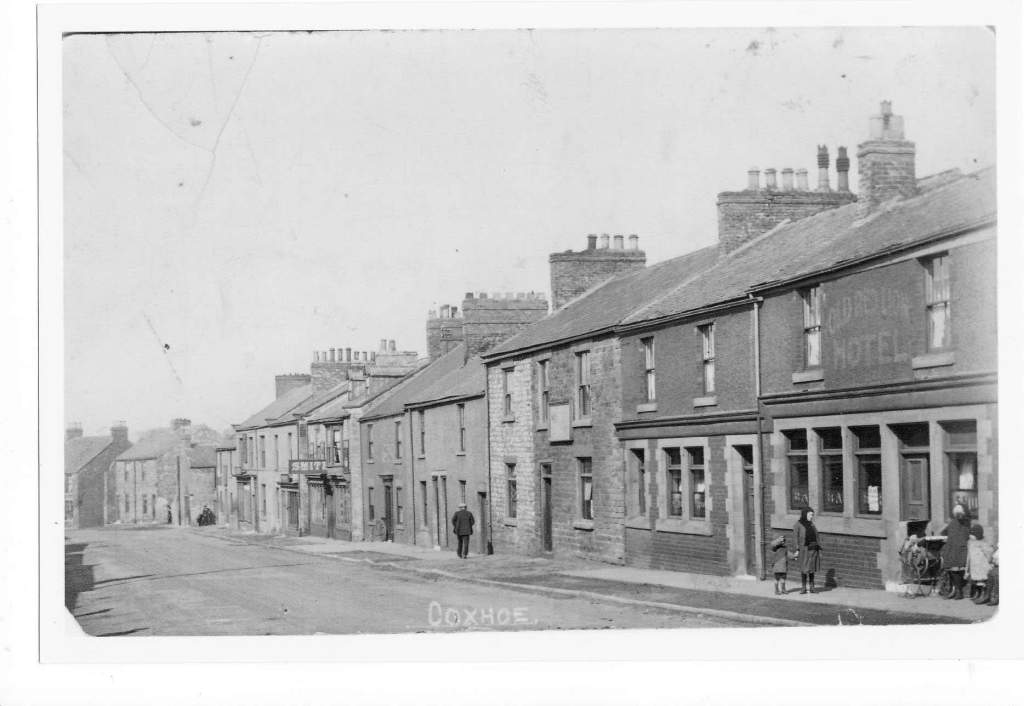
The manager at that time was a Mr Sharp who left because of ill health. Membership in the society increased. Balance sheets recorded a business of £60 per week, or ten shillings per member. A dividend of 1s. 6d. was declared on members’ purchases and 1 shilling in the pound was paid on non-members’ purchases.
John Lister and William Wilson were the society’s auditors

About 1872 they moved again into a shop previously occupied by Robert Swinton and decided to have two committee members present at the quarter’s end stocktaking. They discovered discrepancies which prevented the payment of any dividend and left the society £200 in debt. Shopmen were dismissed and a new manager was found. Mark Robinson, from Haswell Co-operative Society was appointed as manager, and before long the store needed larger premises. None was found in Coxhoe, so eventually they secured land from Mr Morrison, adjoining the Primitive Methodist Chapel and part of the present buildings was erected.
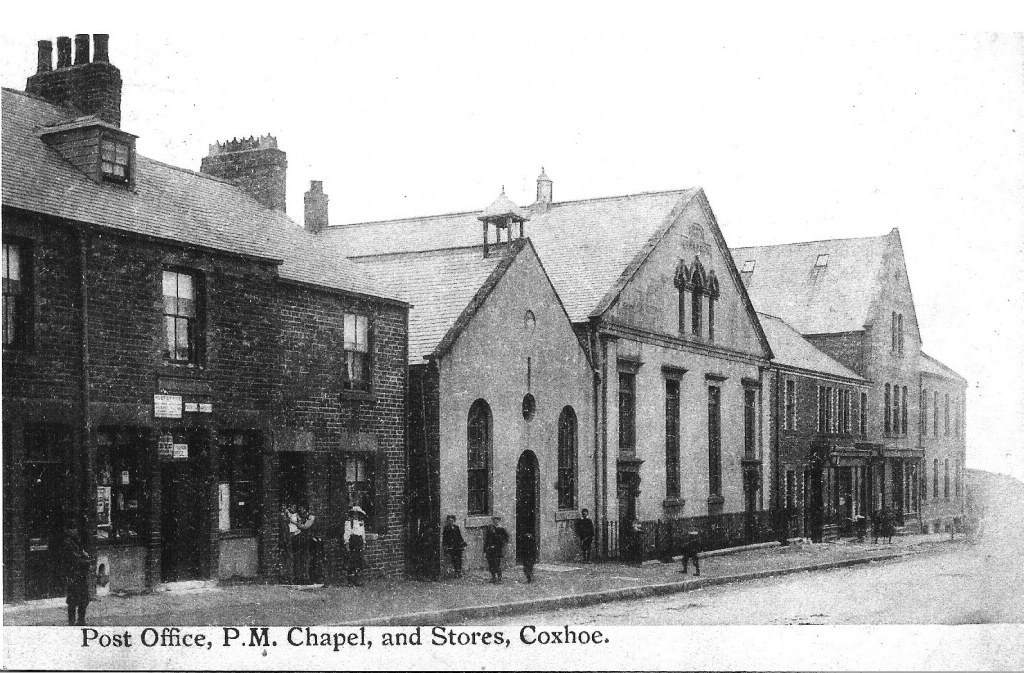
The manager’s house, with grocery department, was on the first floor, and the draperies were upstairs, with warehouse, flour shop, stables and committee-room behind.
Trade Depression
There was a trade depression 1876-1878 when all collieries in the immediate neighbourhood, and Rosedale & Ferryhill Iron Company’s Works, closed down. Some members went to other places; but nearly all wanted to withdraw their share capital in order to provide themselves with food, and the committee had to enforce a rule to limit the withdrawal of share capital.
Luckily some members stayed loyal and the society was able to allow withdrawals of one-half of what stood to the credit of each member, then later half of what remained. Within twelve months the collieries were open again and members flocked back.
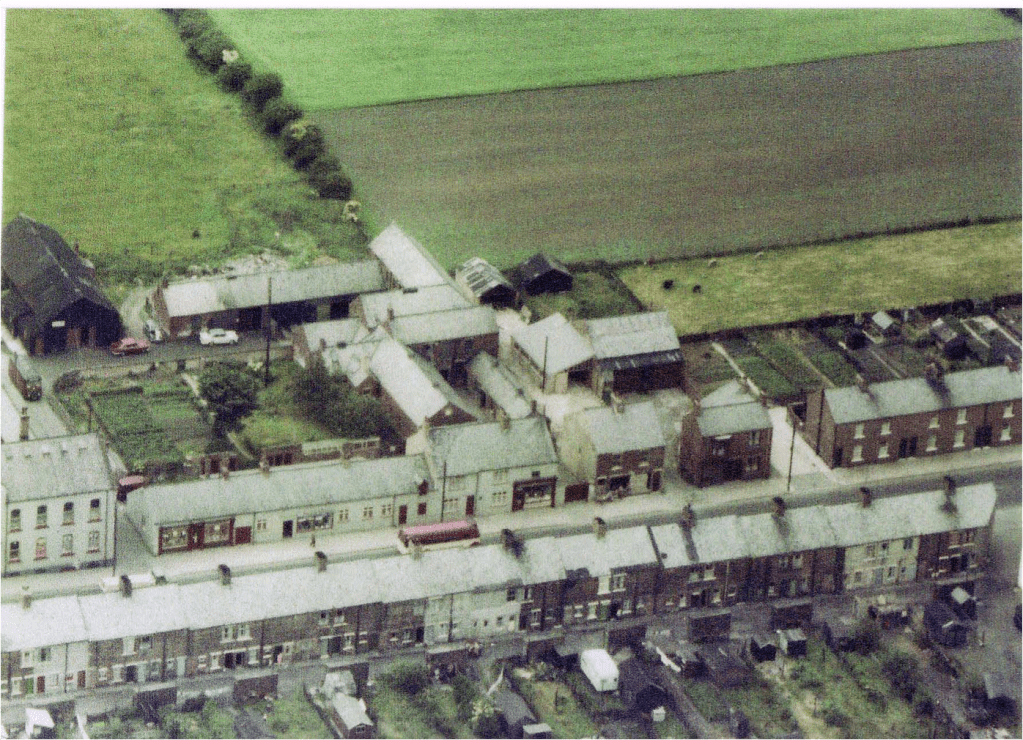
A new butchering department began in 1887, in two old empty houses in the long row, opposite the premises. The society later secured the old “Queen’s Head” (better known then as the “Free and Easy”) and Mr Lindsay an architect from Bishop Auckland, prepared plans to have the house altered. They also purchased old cottages between the new premises and the butchering department, so that they could if needed provide a continuous frontage from the Manager’s house to the butchering department.
Other Stores
Around this time West Cornforth district had become keen to have a store for their residents. A full meeting decided against this so West Cornforth decided to start their own society.
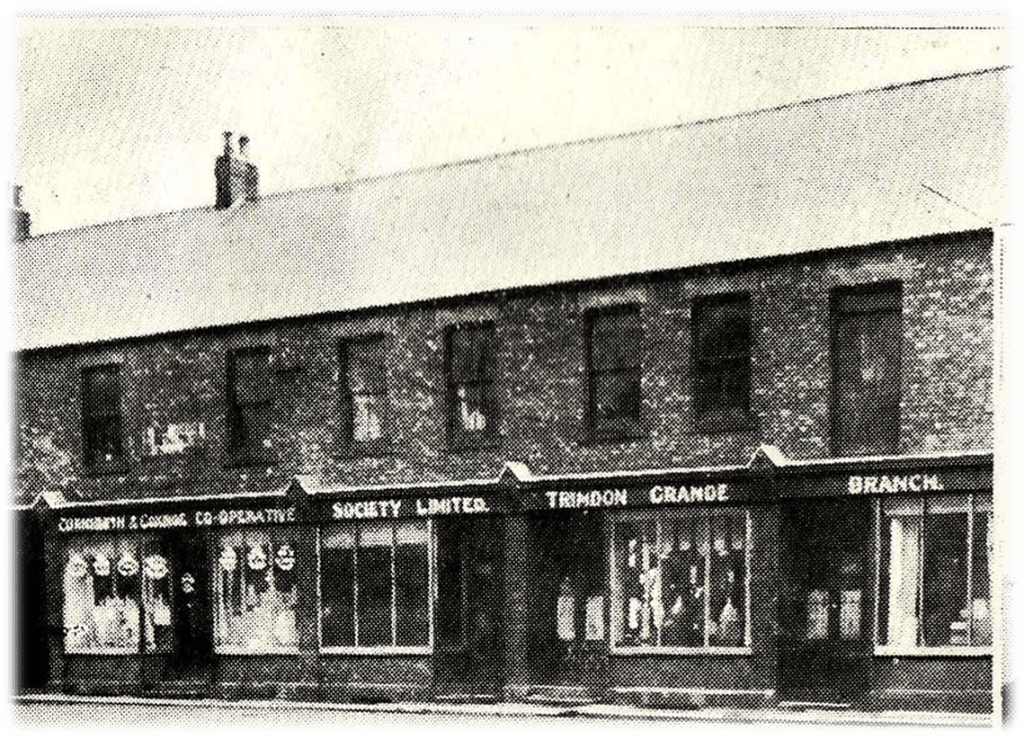
Around 1894 a new branch was opened at Trimdon Grange.

Ferryhill branch first opened in 1901 in rented premises
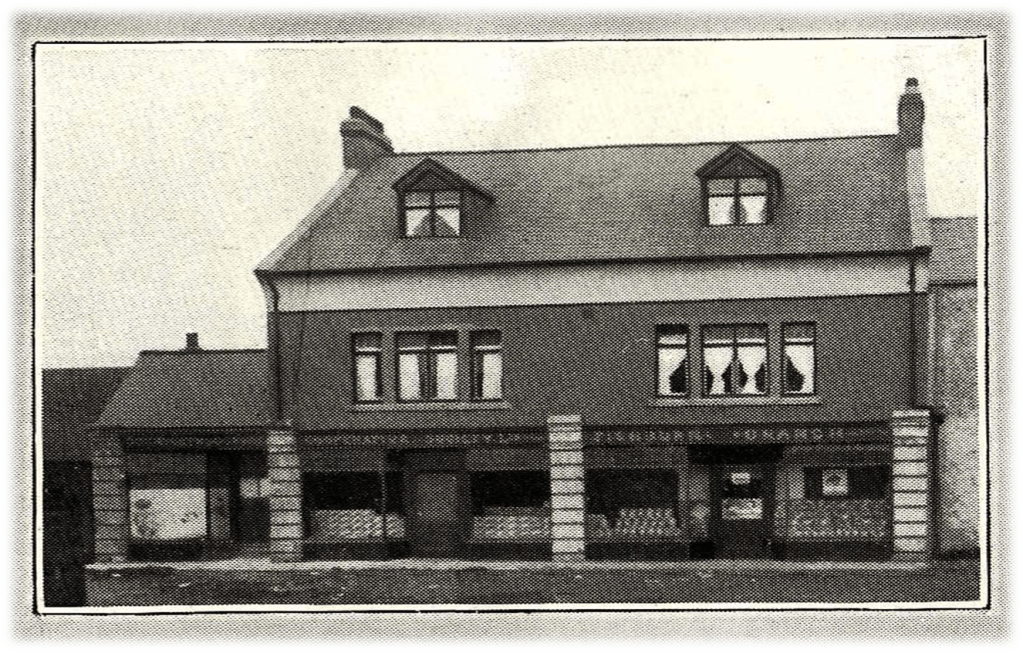
Fishburn Co-op was opened 1912
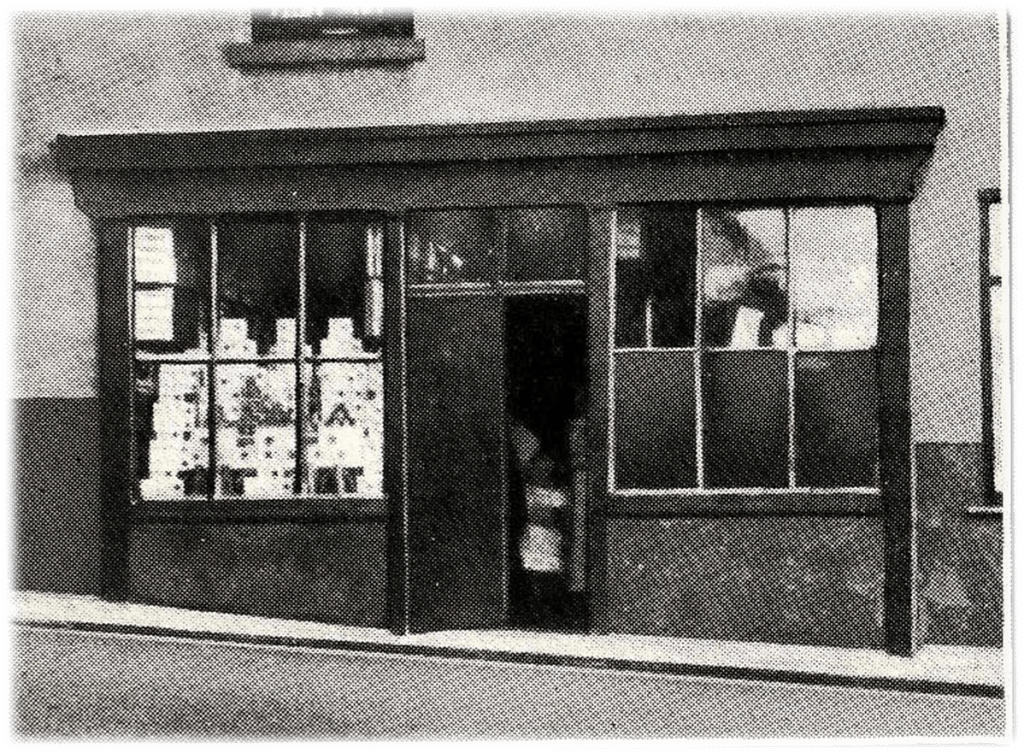
Followed by Kelloe Co-op
Trade Directories & Census
In the 1890 and 1894 Trade Directories of Coxhoe, Mark Robinson is named as the store manager and Walter Macdonald as secretary,


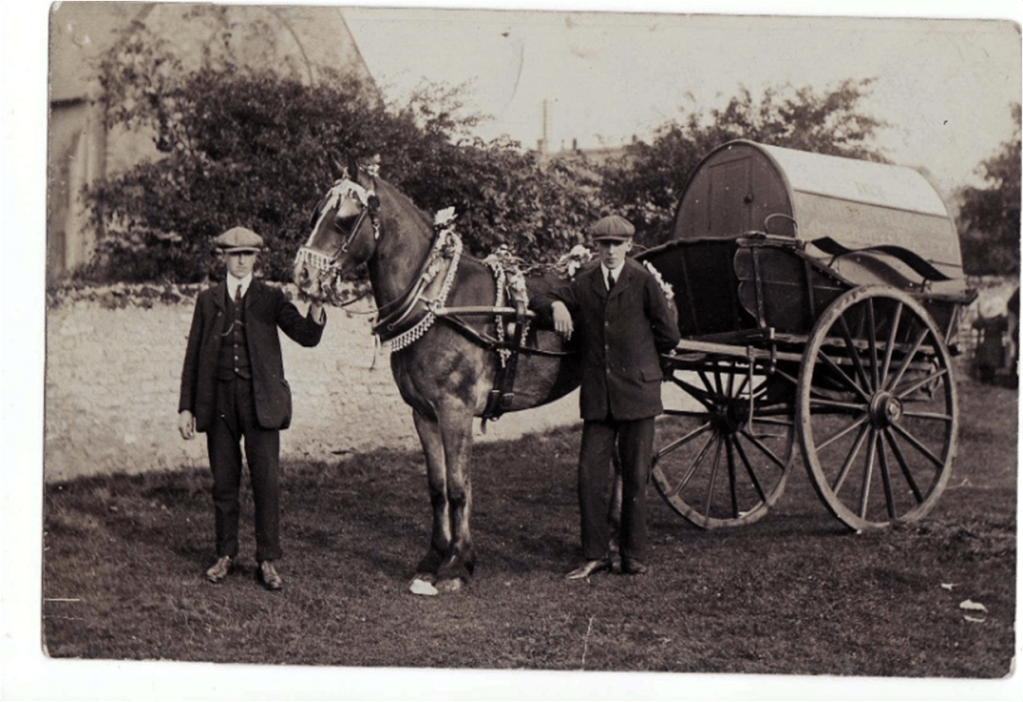
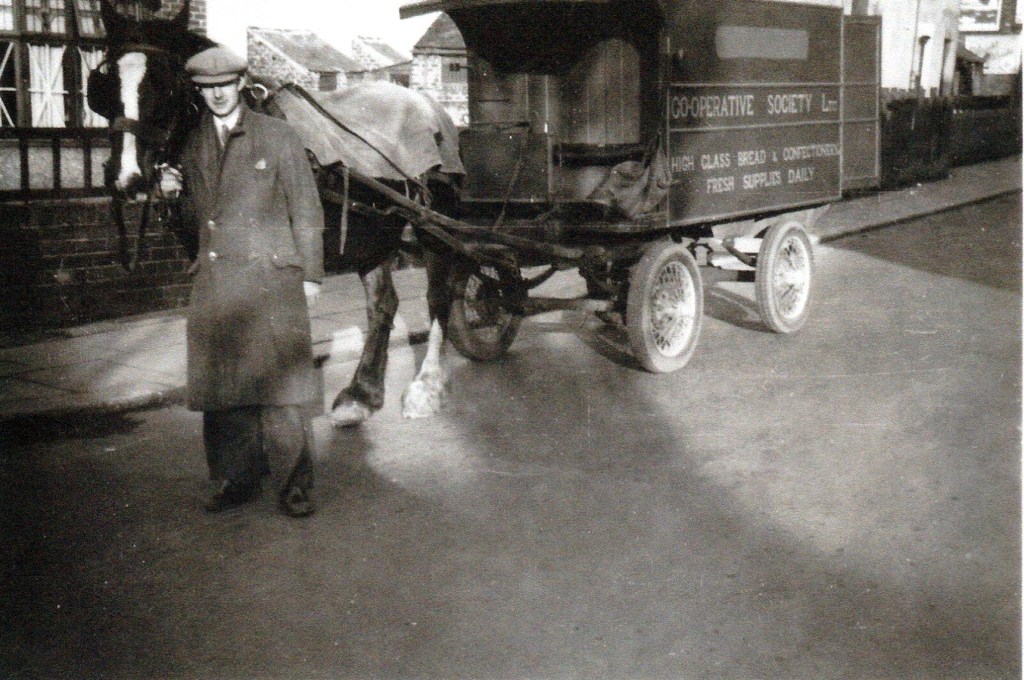
and according to the 1901 census, Thomas Keen was the Co-op tailor. Isaac Berriman was the butcher then and would have used a horse and cart to make deliveries, his son Richard Berriman served on the Store Committee in the 1930s and 1940s.
Butchers horse & cart
In the 1940’s and 1950’s the store was as follows:
The upstairs departments were clothes, shoes, hardware and china, and the managers office. The Boardroom was also on the top floor.
Downstairs were carpets, lino and soft furnishings and groceries. There was Eva Brown and Mary Lindsay in Drapery; Miss Hammond in shoes, Alf Heron in hardware and his nephew, Jack Heron was in Menswear, his father was the store Manager. Cyril Westgarth was the Chemist;
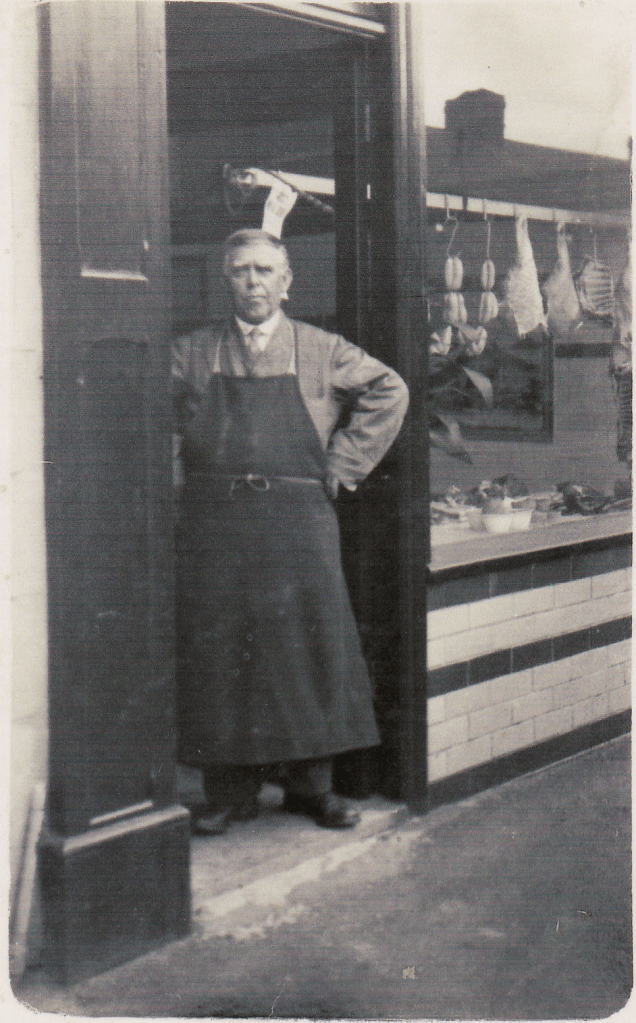
Bert Forester was the cashier and had previously worked at the Kelloe store prior to Coxhoe. Bill Ellerby was the barber. In what is now a gothic goods shop, formerly No 1 Store Cottages was the bakery and green grocery departments with Miss Bowan in charge. At the other end of the cottages was the Butchering Department with buildings to accommodate livestock and slaughtering. Frank Heron and George Young were butchers managed by Jack Shotton (also leader of Coxhoe Silver Band).
The entrance for Jack Scorer’s cobbler department was on the left along the present drive towards Coxhoe Timber Services workshop. Arthur Collingwood and the Griffiths family were shoe makers and cobblers. At the back of the store were the stables and carts. This area would later become Gatenbys TV repair shop and today in The Rocking Horse Rehearsal; Rooms.

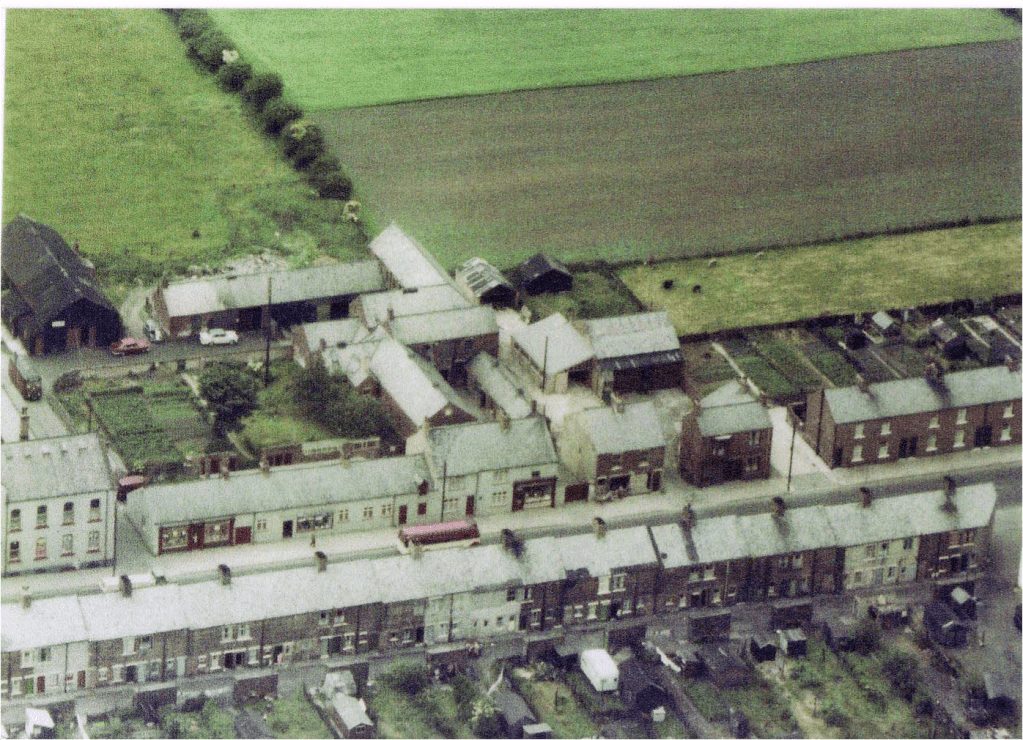
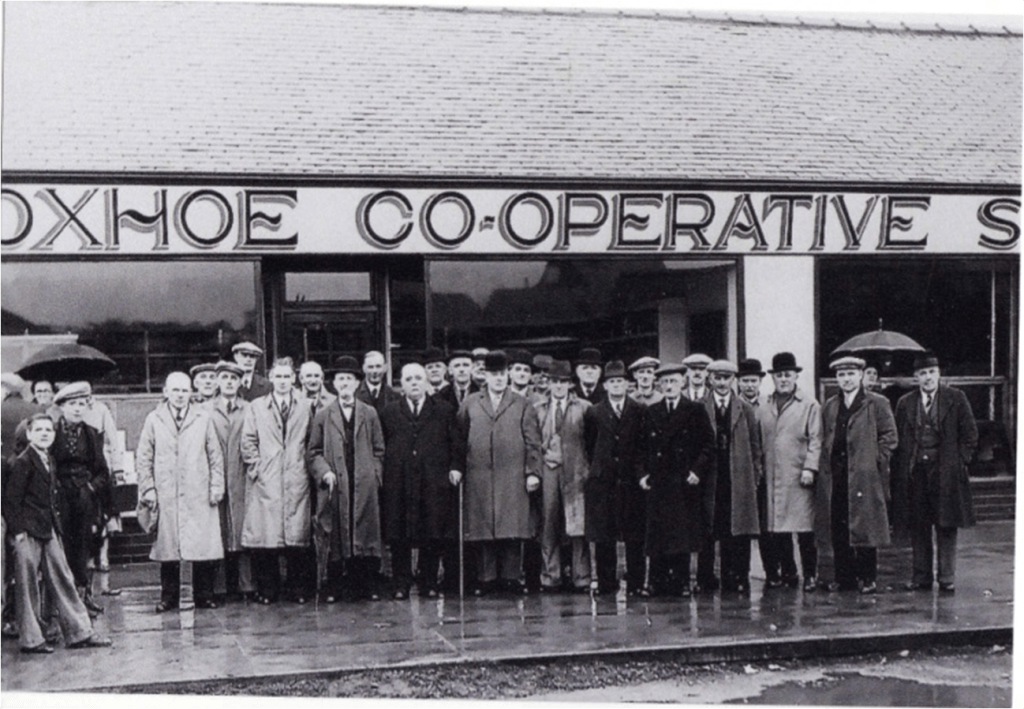
The dark building at the left of the photograph was the store hall where dances and concerts took place. We recently discovered that the structure came from Birtley and was used to house Belgian refugees during World War 1 who came to England and worked in the armaments factories in Birtley. Vera Berriman recalled winning a prize as a clown in a fancy dress competition held in the store hall. The remains of a stage can still be seen today. It is the workshop of Coxhoe Timber Services.

Mr Johnson was manager of the joiners and undertakers deptartment in the building now known as Cubello’s.
The Undertakers plaque can be see on the wall behind Doris Johnson and her cousin Raymond.
Orders & Delivery
In the 1940’s customers would have their orders taken by a Co-op agent such as Bobby Guite who came to the house. Friday was pay-day when customers would pay for the previous week’s credit either in store or be collected by agents such as Charlie Barber, who worked in the grocery department after he returned from the war.
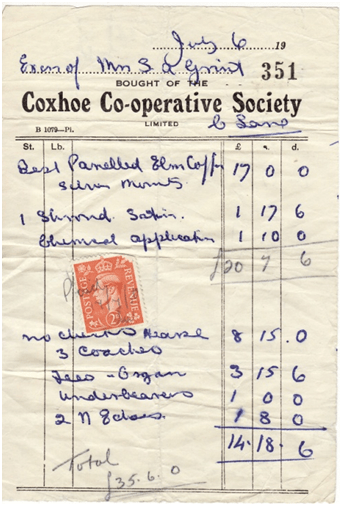

Tokens or checks such as the one below were given out to members and would equal the amount of money spent in the store. These would be kept until the stores dividend was declared, either quarterly or half yearly. Members would then take them into the store office to be redeemed for cash. If the dividend was 2 shillings in the pound, on £3 in purchases would result in 6 shillings.

After the WW1 coloured tokens for use in the milk dept could be purchased at the Co-op and the value credited to your account. The tokens could then be left out or given to the delivery man so no cash was involved and deliveries were speeded up.
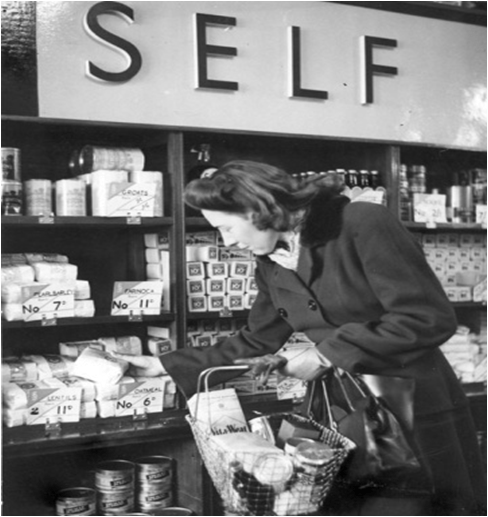
In 1942 the first self-service shop was opened by the London Co-operative Society. (Picture taken from the Co-op Wholesale Society’s website). Hetton Co-op went self-service in 1960.
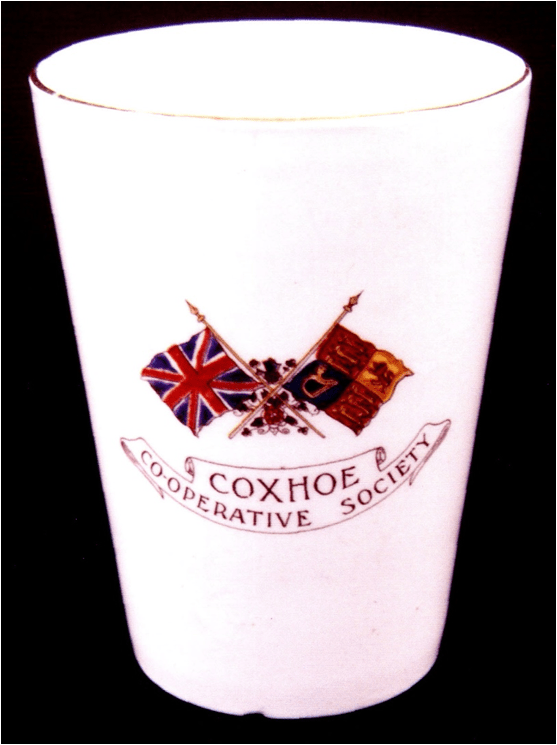
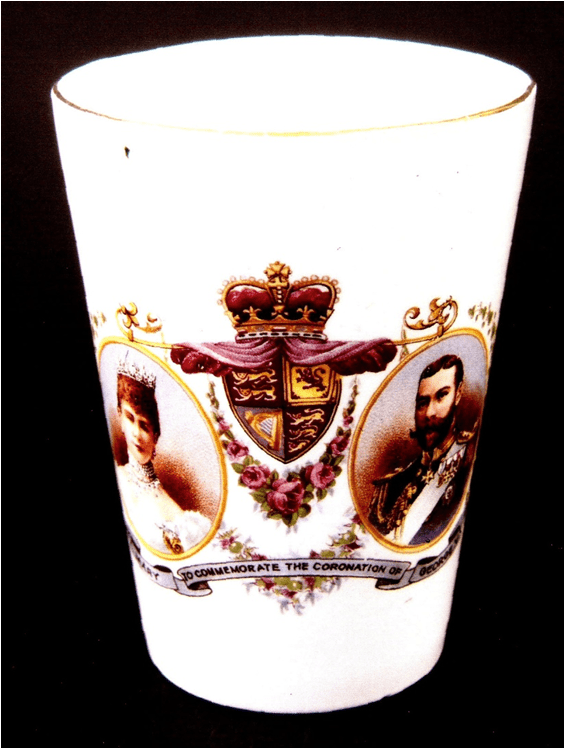
The Coronation of George V and Queen Mary 1911
 Coxhoe Local History Group