
(Copyright Coxhoe Local History Group)
Part 1.
By Barbara Leo
History of pub signs
Pub signs and names are good indicators of history. Pub signs go back as far as the Romans when a ‘Tabernae’ (tavern) in England would have a small evergreen bush outside to show they sold wine or an ale stake to show they sold ale.
Some names clearly came from historic events, myths, legends, royalty, topography, landmarks, trades or local connections. All came from the need to inform people of the time, who were generally illiterate, and pictorial signs could be recognized when words could not be read. The naming of pubs and inns became common in about 12th century. The pub name ‘Pig and Whistle’ for example, is a common corruption of ‘peg and wassail’ (to toast someone). Wassail is also a beer made from apples, sugar and nutmeg.
Inns flourished in market towns in the Middle Ages, where they served traders needing overnight accommodation, food and refreshment. Water pollution was a problem at that time, so ale became the most common and safe drink. Brewers sold ale from rooms in their houses and in village ale houses. Ale was often served in a single large vessel that was handed round, its portions marked in pegs. In 1393 Richard II passed an act making it compulsory for pubs and inns to have signs in order to identify them to the official Ale Taster. Before painted signs became popular publicans would identify their establishment by hanging or standing a distinctive object outside such as a boot, a copper kettle or branch from a tree.
Before Henry VIII’s Reformation, pub signs and names had religious themes e.g. ‘The Cross Keys’, the emblem of St Peter. Religious houses ran inns to cater for pilgrims and knights on the way to the Crusades in the Holy land and some names today still reflect that e.g., the ‘Mitre’ or the ‘Ship’ (symbolizing the Ark); the ‘Anchor’ (symbolizing Christian faith). After Henry’s split with the Catholic Church, names took on themes such as ‘The Kings Head’ or ‘The Rose and Crown’.
Royal coats of arms were popular from the time of the Norman Conquest, with names such as Black, White, Red and Golden Lions. The ‘Red Lion’ was the name given to two pubs in Coxhoe and is probably one of the most common names for a pub. It comes from the time of James I and VI of Scotland who came to the throne in 1603. He ordered that the heraldic red lion of Scotland be displayed on buildings of importance. Some signs had royal links such as ‘White Lion’ inns which date from Edward IV time or the ‘White Boar’ (emblem of Richard III). The ‘Unicorn’ was the emblem of the Scottish arms; the ‘Red Dragon’ was Welsh; the ‘White Horse’, Hanoverian and the ‘Rising Sun’ was the badge of Edward III.
Famous and infamous people could be immortalized e.g., ‘Nelson’, ‘Duke of Wellington’ or ‘Dick Turpin’. Often the predominant trade of the area would give a pub its name e.g., The ‘Golden Fleece’ (wool trade), the ‘Coopers’ (barrel maker), ‘Saddlers Arms’ and ‘Mason Arms’.
Hunting grounds gave rise to pub names such as ‘The Greyhound’, the ‘Fox and Hounds’ or ‘Hare and Hounds’.
Early Elizabethan Inns catered to the professional classes, selling wine and quality food. These fell into decline towards the end of the 18th century. An increase in drunken behavior being one reason and professional folk became more interested in gentlemen’s clubs.
Coaching inns blossomed in the mid 18th – 19th century with the increase of travel by horse and cart, and used names such as ‘Coach and Horses’ or ‘Horse and Groom’. It’s easy to recognize a former coaching inn as many still have high arches from the street to the stable yard behind, where porters, coach repairers, grooms and blacksmiths all worked. Donkeys have been used throughout history for pulling wagons and transport hence common names such as ‘Jack and Jenny’ or ‘Kicking Cuddy’. Coaching inns fell out of favour with the introduction of railways, when coaching inns could not compete with public houses and bars served by the railway network. More recent names reflect the social and industrial change in Coxhoe e.g payer could sell beer without a licence, leading to many beer houses and back room bars. Regulations were later put in place in 1869 which forced many small brewers out of business leaving the market place open for larger breweries to take over. . ‘The Railway Tavern’ and the ‘Bridge Inn’.
There is a story that, in Stratford, the London coach changed horses at the ‘Bull’ and the Birmingham coach stopped across the road at the ‘Cock Inn’. The passengers from each coach would swap news while waiting for the horses to be changed and that is where the phrase “cock and bull story” is said to have originated. The abolition of beer tax in 1830 meant any rate
Brewers named in Coxhoe trade directories were:
- 1851 : John Richardson “Davy Lamp”, Brewer and Maltser
- 1855 : Cuthbert Allison East Hetton Brewer
- 1855 : John Richardson, Cassop Brewer
- 1855 : Ralph Carnaby Blackgate Brewer
- 1855 : Richard Matthew, Coxhoe Lane end Brewer
- 1855 : Thomas Scott, Coxhoe Bridge Station Brewer
- 1855 : Thomas Gates Beer Retailer
- 1864 : Robert Carr Coxhoe Pottery Beer retailer
- 1890 : James Rudderham Beer retailer
- 1890 : Brian Keaveny Blackgate Beer retailer
- 1894-1906 : Thomas Davison Wine & spirit agent for Gilbeys
- 1902 : George Oliver Blackgate Brewer
- 1929 : Ellen Robinson Beer retailer
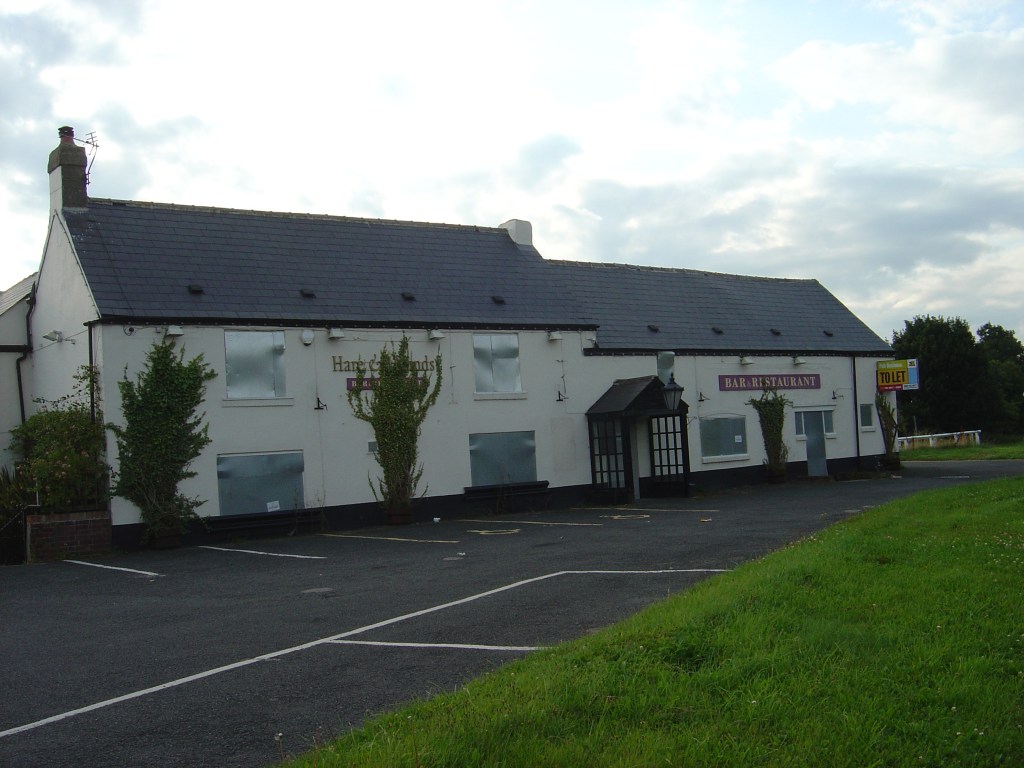
The Hare and Hounds is close to the site of an 18th century village known as Garmondsway. Garmondsway would have been known by Danes & Saxons, its Medieval remains scheduled as an ‘Ancient Monument’. The Hare and Hounds was originally a row of cottages in the 1700’s and later converted into a coaching inn in the 1800’s. As the name suggests was a regular meet for the South Durham Foxhounds. Early trade directories have listed it as the “Fox and Hounds” and “College House Inn”. At the time of writing the pub is boarded up.
Publicans were:
1851, 1855, 1856 John Bell
1861 Dorothy Bell
1871 Augustine Bell
1888, 1894 David Applegarth
1906 Hannah Applegarth
The Applegarths and Bells had been close neighbours from at least 1841. Robert and Mary Applegarth at Simonside Farm, John and Dorothy Bell farming on Garmondsway Moor. The Bell’s family, father, mother then son were farmers & innkeepers in the Hare and Hounds (or sometimes known as College Inn or College Hill) from about 1841 to around 1871.
John Bell was born 1792 in Kelloe, he married Dorothy who was born 1801 in Northumberland. They had the following 8 children: John b. abt 1826; Henry b. abt 1827; Thomas b.abt 1828; Jane A b.abt 1830; William b.abt 1830; Augustine b. abt 1831; Robert b. abt 1832; Charles b. abt 1833.
George Applegarth (1843-1909) and Sarah (1835-1910) were on Simonside farm from about 1882. They and their son John (1878-1854) are buried at St Mary’s Church, Coxhoe.
His brother David Applegarth (b. 1837 at Hare & Hounds Inn, d. 1898) and wife Hannah (b. 1841 Cowton, d. 1914) are buried in Bishop Middleham. They are listed in 1881 census as being the next innkeepers until about 1906 where Hannah only is listed in the Kelly’s Trade Directory. Their children were: Mary Alice b. 1865 at Bishop Middleham; John b. 1867 at Bishop Middleham; William b. 1869 at N Cowton; Elizabeth b.1870 at N Cowton; Robert b. 1872 at N Cowton; David Tom b.1882-1907 at College Hill; Amy Applegarth b. 1887 at College Hill.
The Bridge Inn / Hotel
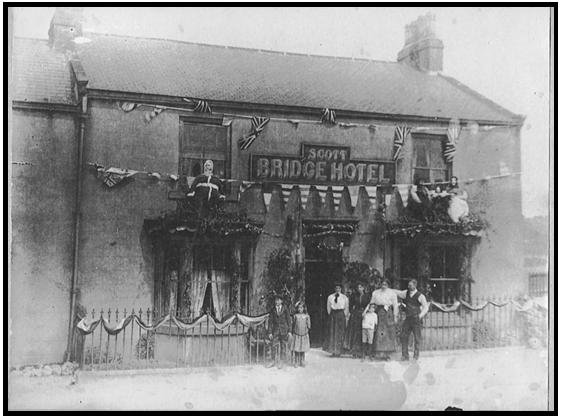
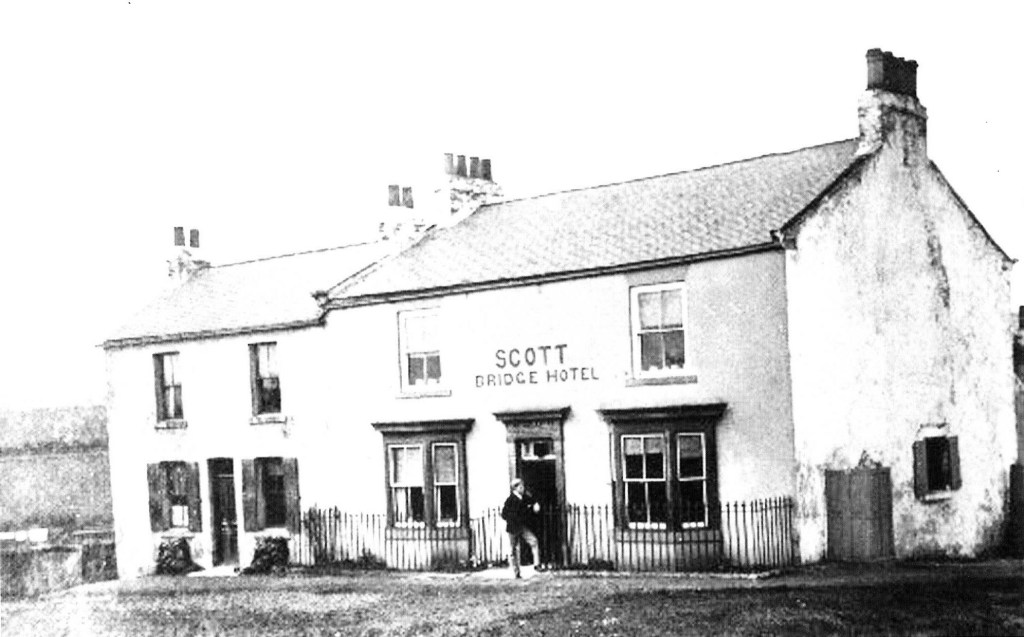
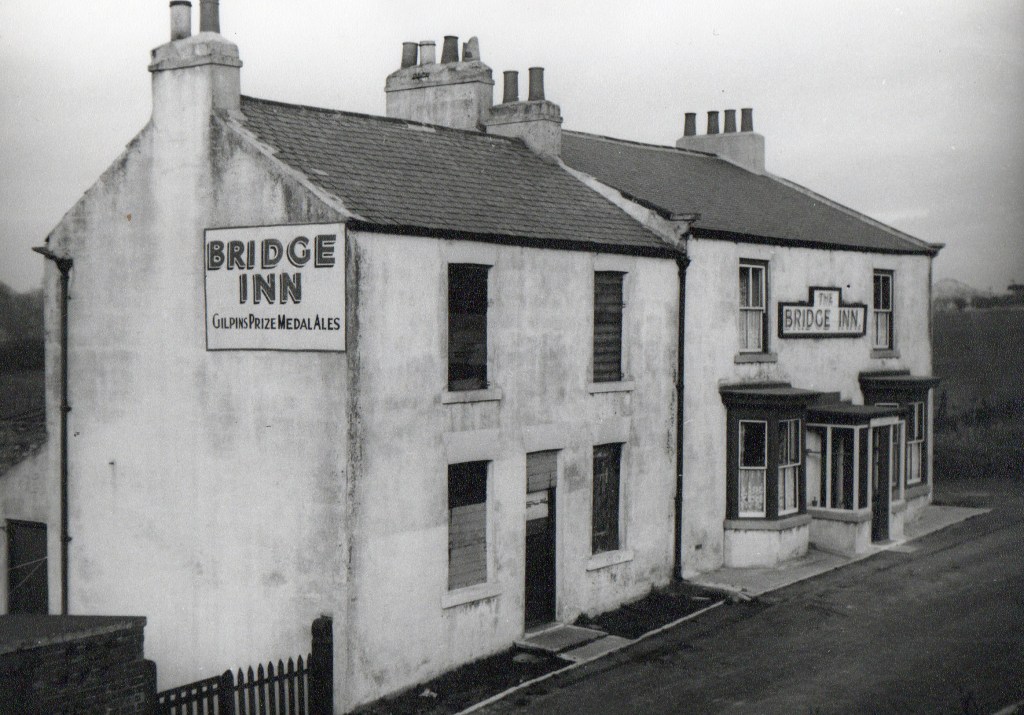
The Great North of England, Clarence & Hartlepool Junction Railway line was built at the south of Coxhoe in about 1837. A turnpike road crossed the track at Coxhoe Bridge. A hotel was built near to the station to provide overnight accommodation & food, its proprietor was Thomas Lammas Scott, the stationmaster.
Publicans of the Bridge Hotel were:
1837, 1841, 1845 Thomas Scott
1855 & 1858 Thomas Scott
1864,1871 James Scott
1881 Isabella Scott
1891 & 1901 John Scott son of James and Isabella
1921 Thomas Welsh
1938 C H Heron
Thomas Scott was born 1816 in West Bounton Yorkshire. He married Margaret Lammas, daughter of Coxhoe potter, she was born 1817 in Cornforth, Durham. The earliest record to date of a Thomas Scott as the publican of BRIDGE INN, COXHOE is 1837. Thomas and Margaret were living there with the following children : James Lammas b.1840; Thomas b. 1842; Joseph b.1843; John b.1847; Arthur b.1849; Charles b. 1852 (1874 marriage to Dinah Eleanor French b. 1853 ), all born in Coxhoe.
Thomas remains in the Bridge Inn until around 1871 when the census returns, record James Scott , his son, as the publican. James Lammas Scott was married in 1864 to Isabell Runciman b. 1844, Berwick on Tweed. Their children were: John Thomas b. 1866 in Cornforth, d. 1930 in Coxhoe, buried St Mary’s Church; James L b. 1869, Coxhoe, d. 1942 Coxhoe, buried St Mary’s; George William b. 1870, Coxhoe.
George W. Scott b. 1871 in Coxhoe married Sarah b. 1873 from West Hartlepool. They had a daughter Gladys T b. 1894 in Spennymoor. In 1901 George was a shopkeeper in Spennymoor.
James L Scott b.1869 Coxhoe and d. 1942 Coxhoe. His wife Margaret Ellen b. 1872, died Coxhoe 1953, both are buried in St Mary’s Churchyard.
She is Elizabeth Ann Dawson b. 1868, Shincliffe. They have three children: John A b. 1892, Hartlepool; James W b. 1898, John T Scott b. 1866 in Cornforth d. 1930 Coxhoe. His first wife Bertha b. 1868 of West Hartlepool, they are recorded in the 1891 census as publicans in the Bridge Inn, Coxhoe. By 1901 John has a new wife (marr. 1897) helping in the Bridge Inn. Coxhoe; Isabella Mary b.1904, Coxhoe d. 1921, Coxhoe.
Isabella is listed as a retired innkeeper in the 1901 census, however, she is still named in a Kelly’s 1906 trade directory as publican in the Bridge Inn.
Newspaper Articles
The ‘Era’ Newspaper ‘ of 1845 reports that an annual shooting took place at Mr Scott’s, the Bridge Inn in Coxhoe , on New Year’s Day, for a sweepstake of 10s 5d each. The prize was carried off, after some excellent shooting, by George Pickering, alias the “Milk Barrel Lad”.
The Bridge Inn had an inquest held there in April 1874 about the death of Richard Humble, the coroner was Mr J Settle, coroner for Stockton Ward. Mr Humble was a well known horse breaker who resided in Stockton. On 26th March he was found lying severely injured on the road near Coxhoe Bridge and died 3 days afterwards. The deceased had been riding a restive pony, and it was supposed had been accidentally thrown and dragged along the road some distance. The jury returned a verdict that he had been killed in that way.
Another inquest held there in December 1874 by the same coroner concerned Robert Barley, a plate layer who was employed by the North-Eastern Railway Company. He had been clearing snow out of the switches and as he was walking from one to another he heard a small engine belonging to the Rosedale & Ferryhill Company come up behind him. Stepping onto another track to let it pass, another engine with wagons knocked him down, the wheels passing over his right arm and lacerating it. He was taken home, where despite medical aid, died four days later.
The Black Horse
A Camerons Brewery (Hartlepool ) public house that stood on the Turnpike Road. It had a cobbled yard and stables for horses. Popular with local farmers and local constabulary officiers it closed around 2002 and following demolition was rep[aced by housing.
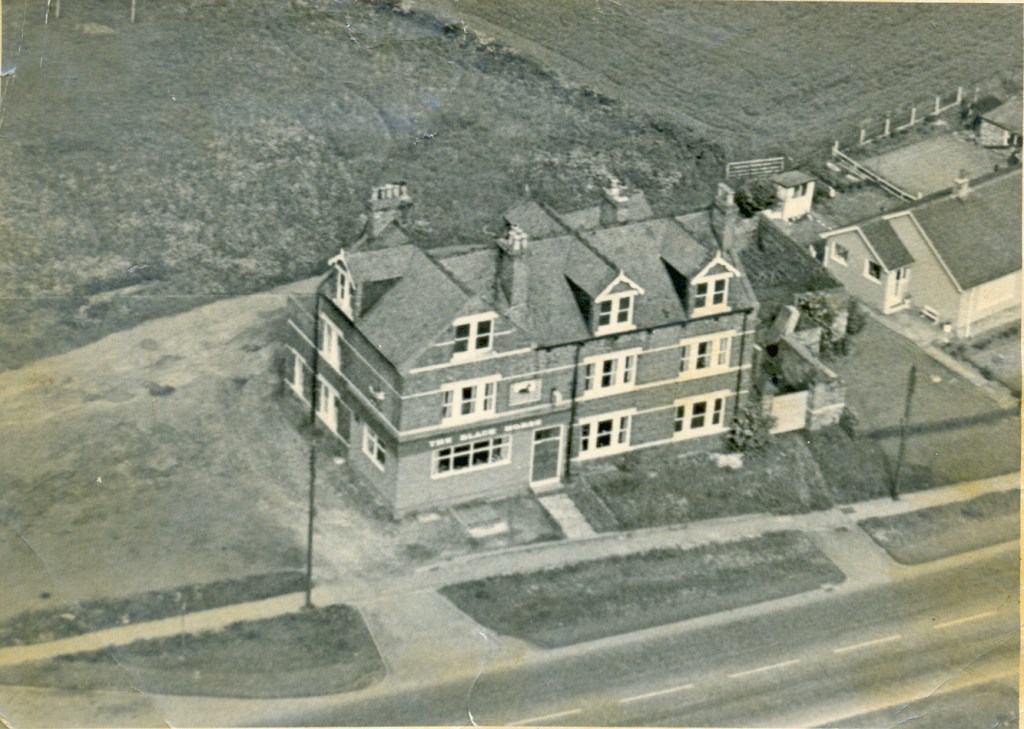
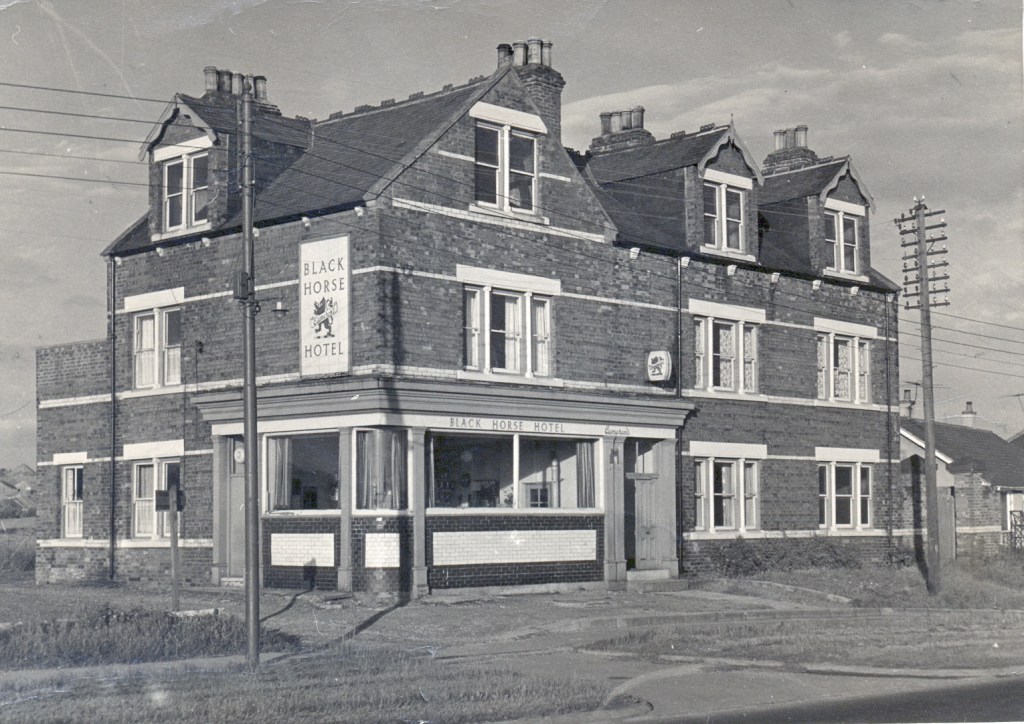
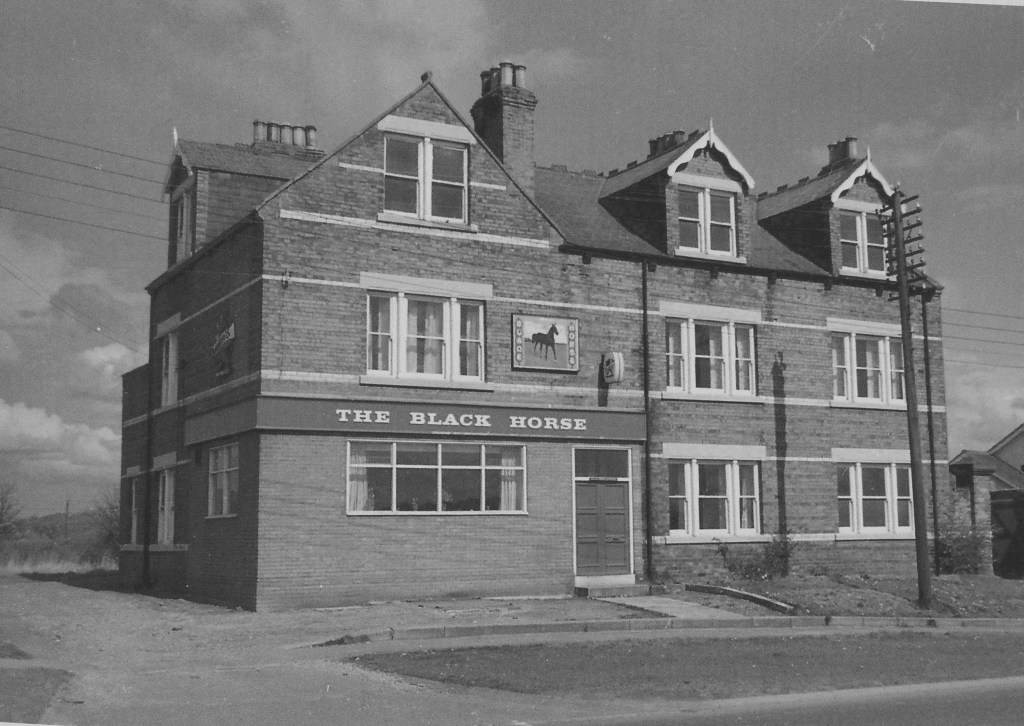
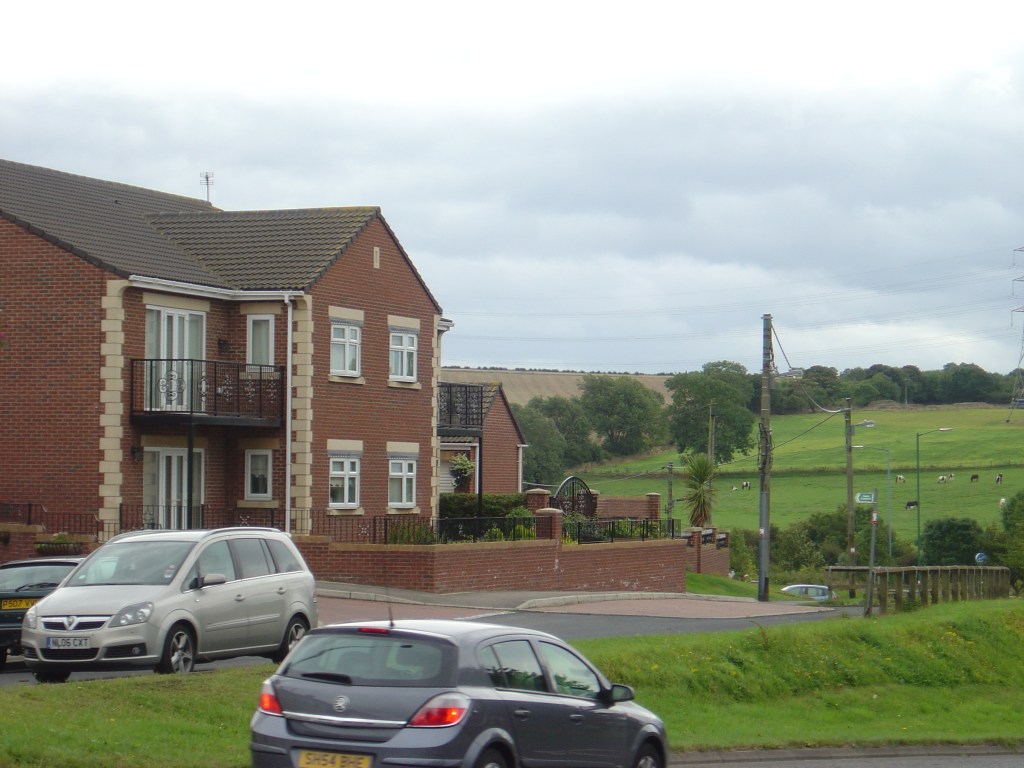
The Black Horse is now demolished and replaced with housing. Publicans of the Black Horse were:
1841 James Grey
1855, 1858 Thomas Cummings
1914, 1921 John Weighman
1938 J B Jackson
1939 Myles Clark
The Seven Stars
On Tuesday 25th August 1891, the Northern Echo reported that the Seven Stars, Coxhoe had its licence withdrawn because the house was in a bad state of repair. The Seven stars was located down from the Vicarage, it would have been where the bungalows are now. The name has two possible links. The name may have been dedicated to St Mary, whose celestial crown incorporated seven stars, or the plough depicted as a constellation, consists of seven stars.
The Seven Stars past publicans were :
1836 George Mohun
1855 John Wandless
1856 William Race
1858 William Cook
1861 Thomas Humphries
1869 William Cook
1871 George Harker
1879 James Galloway
1881 William Armstrong
1891 George Norfolk
The Board
Past publican and blacksmith, 1851 was Thomas William and also Nichols Coussen in 1856, he was also agent for Life Insurance, according to the 1861 census.
The Anchor Public House
The Anchor Inn still stands today as a residential property at Front Street, The Pottery.
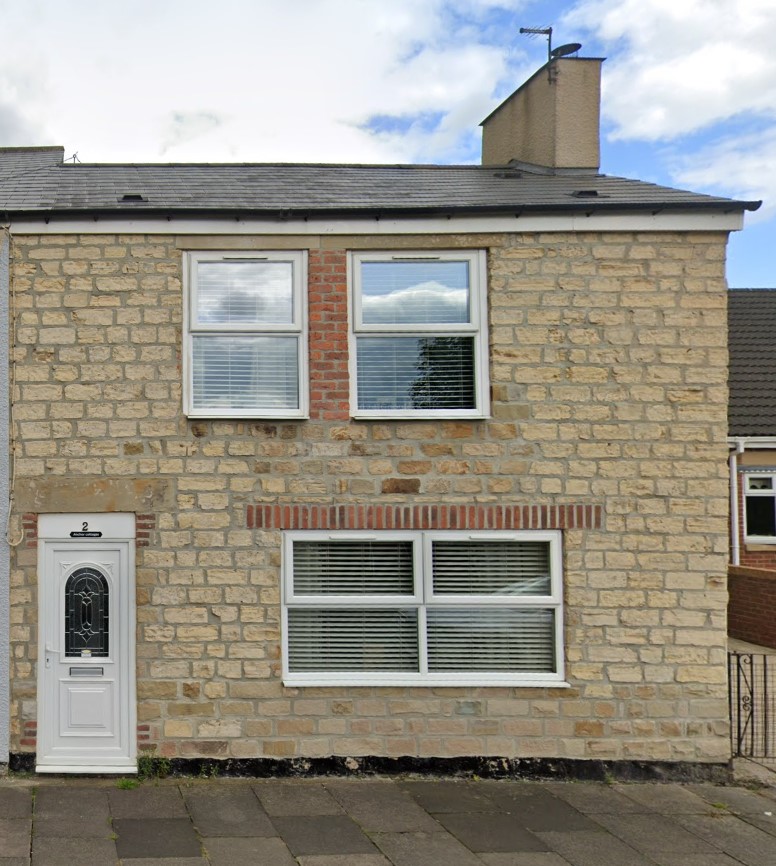
Past publicans were:-
1856 Andrew Napier
1861 William Barrasford (shoe maker & publican)
1864, 1871, 1879, 1881,1890 William Hudson
1891, 1894 Brian Keaveny
1902, 1906 Patrick Killgallon
1911, 1914, 1921 Catherine Convey (nee Killgallon)
1929 Jn Phillips
1930’s Hawley’s & Taylor’s lived in the property, it was owned by Nimmo’s of Castle Eden. Rent was collected by Mr Eggleston (of the Three Tuns).
‘Greyhound’ (Blackgate)
Publicans were:-
- 1855, 1856 : Christopher Swinbank
- 1858, 1864, 1869 : George Carr
- 1879 : James Tommey
- East Hetton also had a “Greyhound Inn”. Some of its publicans were:
- 1855 Margaret Crow
- 1890, 1896 Henry Taylor
- 1938 Jane V Arnold
According to the 1841 census, George Carr at 25 years was a pit labourer. He was born 1814 in Coxhoe, he was married in 1837 in Kelloe to Ann Cufton b. 1839, Kelloe. Ten years later George is a butcher on Blackgate and in 1861 he is a butcher and publican of the Grey Hound Inn on Blackgate. He lives next door to John Carnes (surgeon) and two doors away from James Lockey. George and second wife Sarah b. 1838, Aycliffe remain on Blackgate until around 1881 when they are recorded butchering and farming at Carr’s Cottage, Cornforth Lane, with two of their sons Thomas and William in that and the following 1891 census. By 1901 Sarah is a widow living with Thomas, William and his family.
Their eldest son George Carr (1843), married Isabella b. 1848 Quarrington Hill. George was a butcher at Quarrington Hill and had the following children: Henry b. 1873, Cornforth Lane; George M b. 1875; Robert b. 1876; James b. 1879 all born in Quarrington Hill. They had sons John b. 1859, and Thomas b. 1861 both born in Coxhoe. Son William b.1862 married Ann b. 1861, Langley Moor. He was the butcher at Cornforth Lane, and had two children, John George b. 1894, Cornforth and William D b.1898, Cornforth.
The Red Lion (Blackgate)
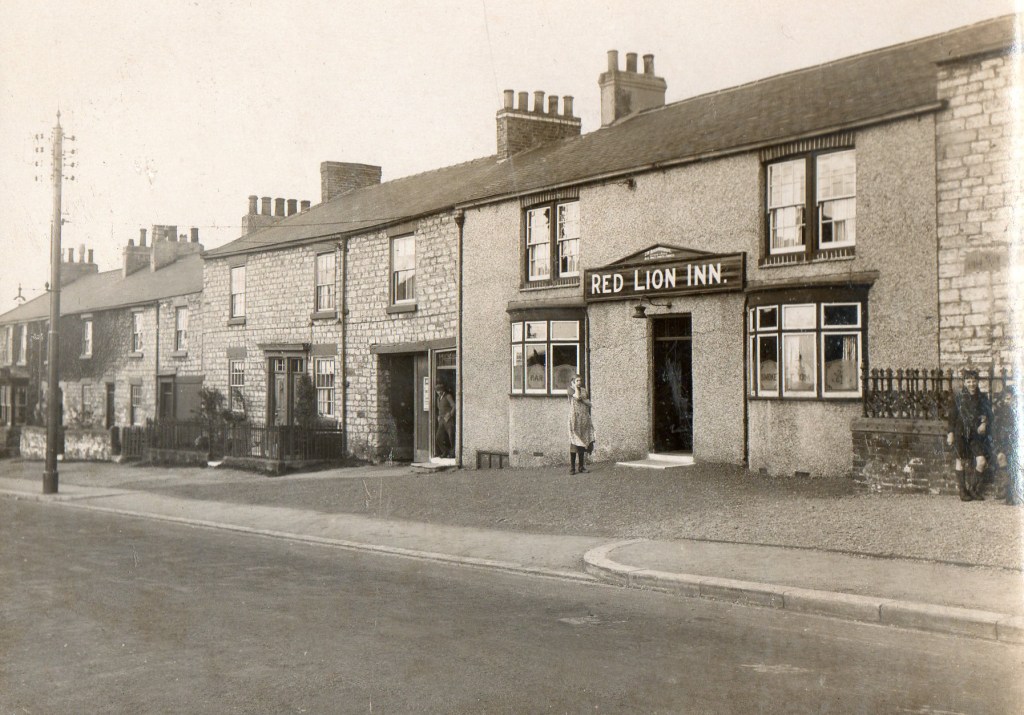
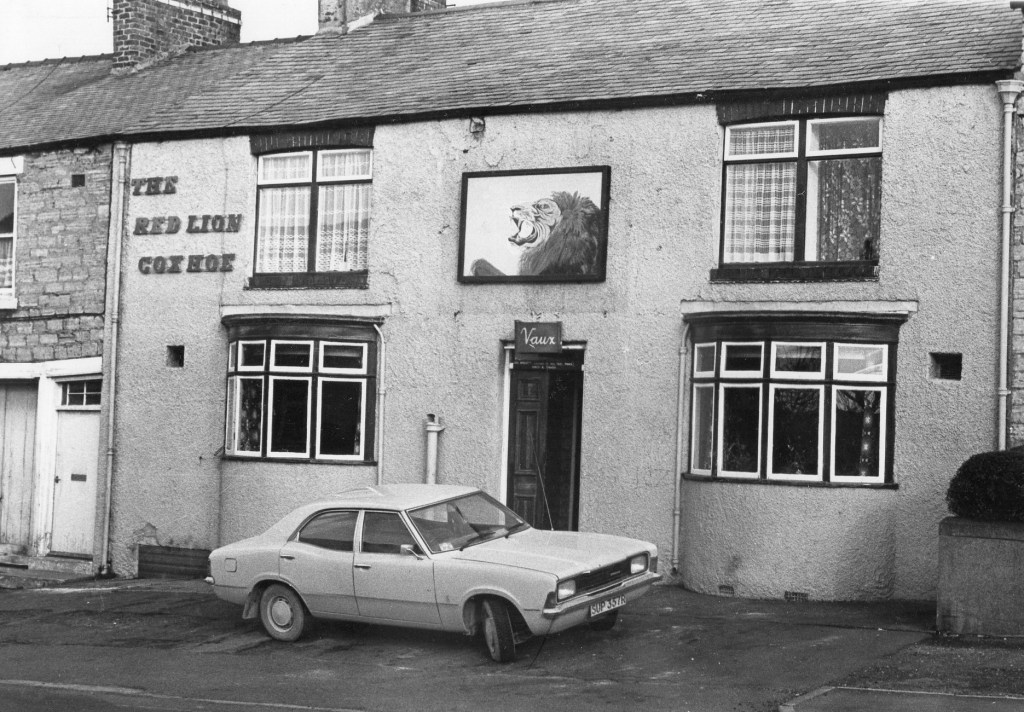
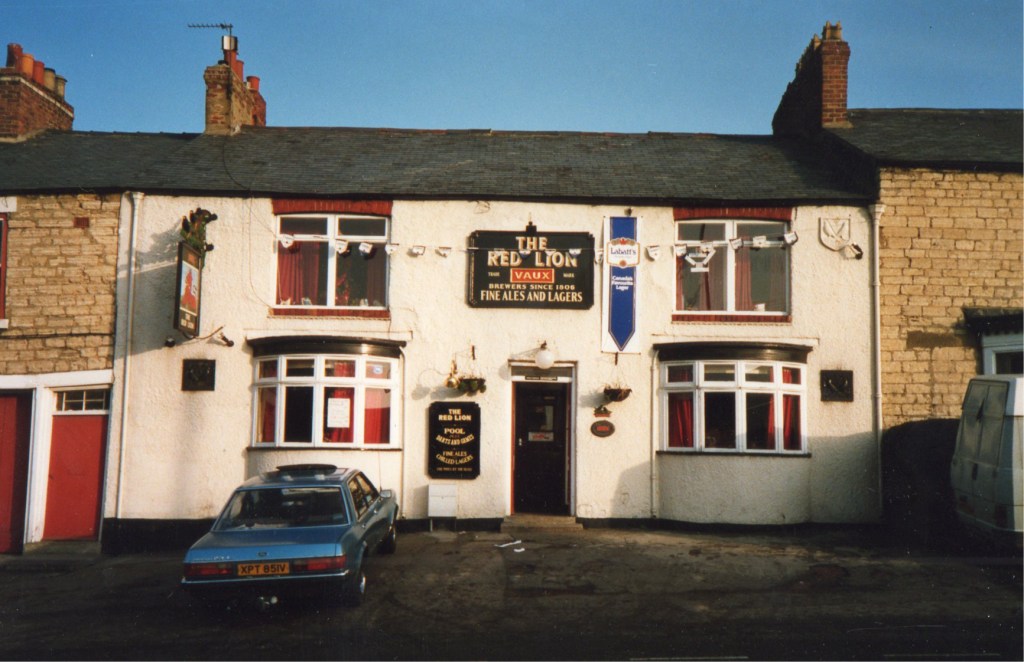
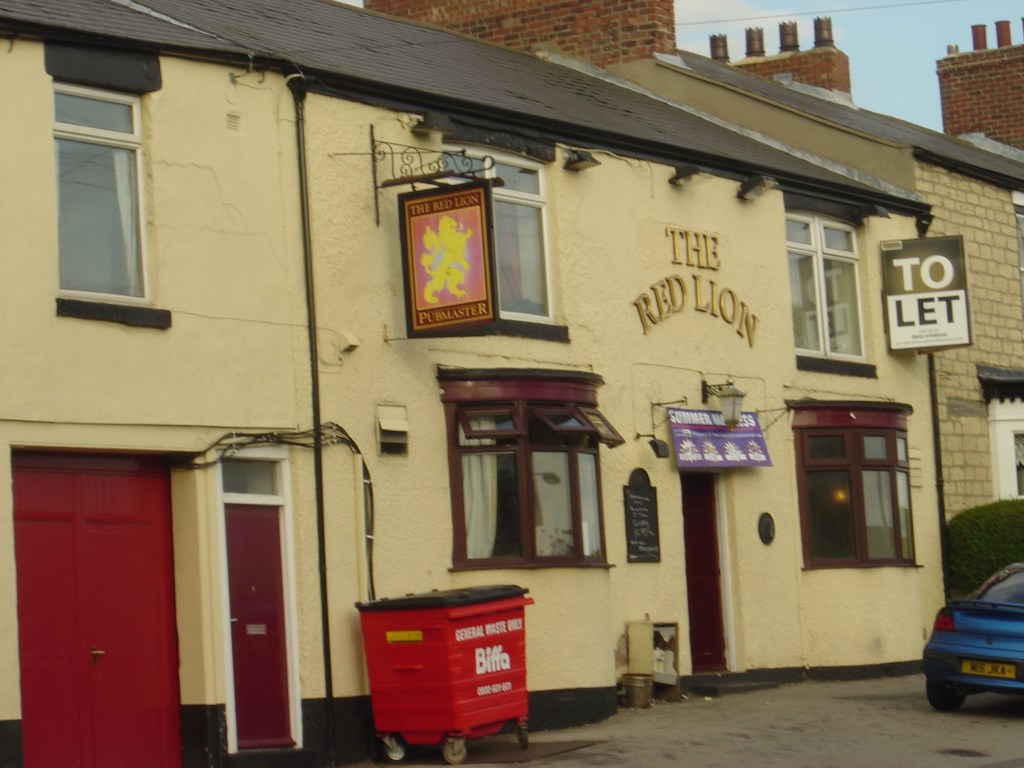
The other Red Lion is in Blackgate and is still in use today and is now known as the Village Tavern and the only surviving traditional public house in Coxhoe.
Its past publicans were:
- 1855 Elizabeth Oliver
- 1856 John Huntley
- 1858 T Dent
- 1861 John Ayre Bell
- 1864 William Wood
- 1890, 1894 John Walker
- 1902 Emma Dunn
- 1914, 1921 Arthur Tinkler
- 1934 Joseph Bainbridge
- 1938 Meggie H Snowdon.
The Three Tuns
The name Three Tuns is based on the arms of the two City of London Guilds, the ‘Worshipful Company of Vinters’ and the ‘Worshipful Company of Brewers’. A tun barrel would have held 252 gallons, usually of wine.
Situated at the crossroads of the village The Three Tuns once sat beside the toll gate of the turnpike road. There was once stables to the rear of the building and may well have been used as a coaching inn.
A well known landmark in Coxhoe. Notable for the slogan “Nimmo’s Ales” which were once painted in large white letters on its roof. Today the Three Tuns contains a series of self contained flats.
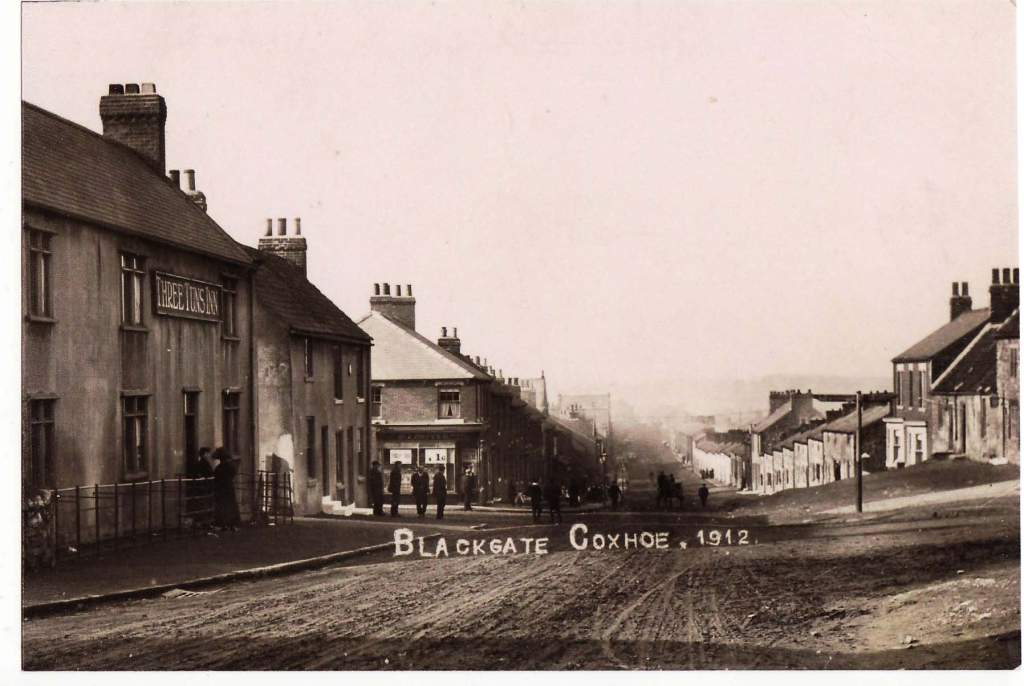
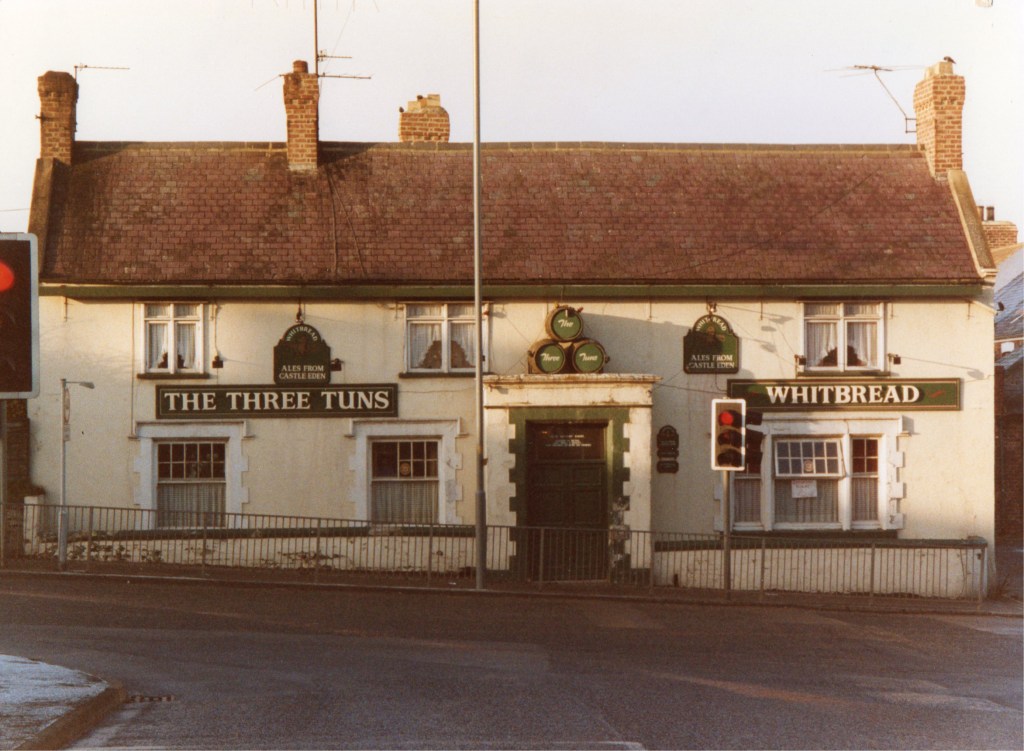
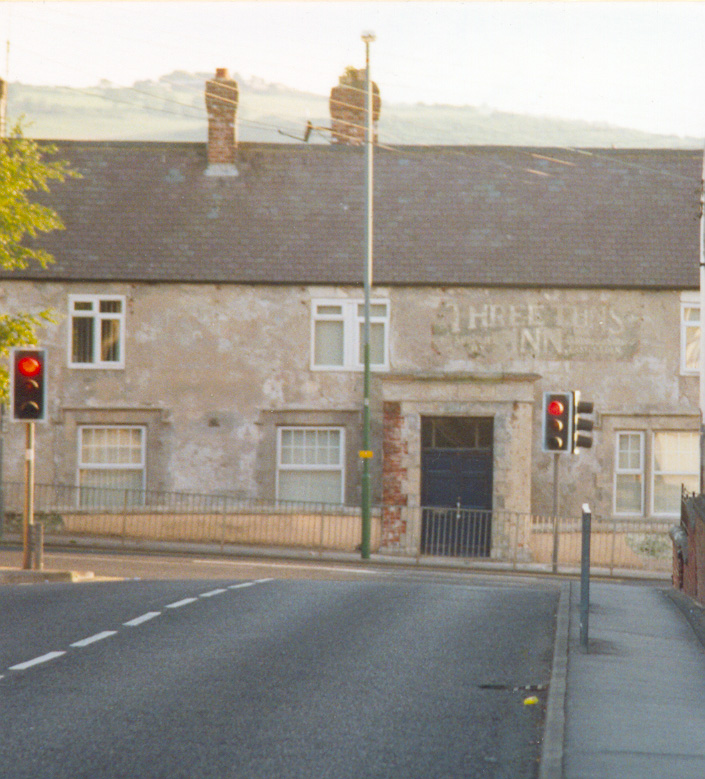
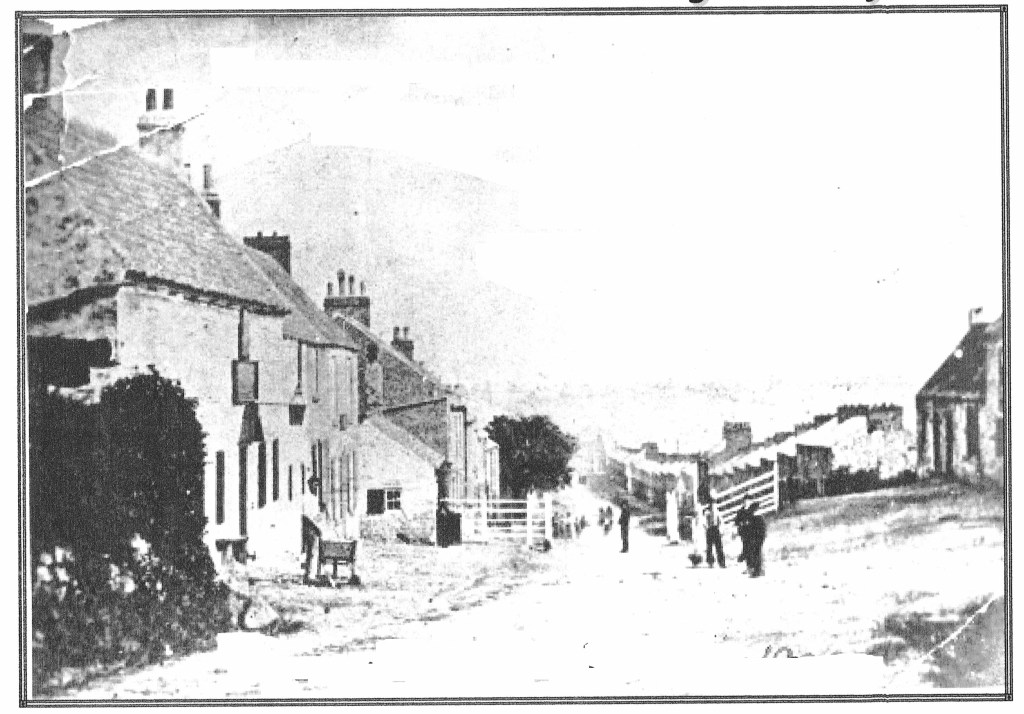
The census lists & trade directories tell who the publicans were:
- 1817 Established
- 1851 William Eggleston
- 1851, 1856 Thomas Featherstone
- 1855 Stephen Best
- 1858 Christopher Swinbank
- 1864, 1881 William Carr
- 1861 Christopher Swinbank
- 1871, 1881 Thomas Carter
- 1891 Robert Bowerbank
- 1894 William Iceton
- 1906 Thomas Dodds
- 1914 Arthur Smith
- 1921, 1938 John T Eggleston.
- 1950’s Owned by Nimmo’s of Castle Eden
Note:- There was also once a Three Tuns Inn in Commercial Row, in 1858 its publican was Thomas Laing, and William Carr from 1861-1881.
 Coxhoe Local History Group
Hello,
I’m researching the lives of John Younger and his family who were living in the Clarence Hetton cottages at Joint Stock Row near the Waggonway in 1841.
my question is this, would the “Waggonway” as described by the census enumerator in fact have been a steam railway line ?
LikeLike
Hi would this be John Younger b 1797 d1869 who married Sarah Scott ?
I believe the wagons would have been steam powered yes , however some may have been pulled by horses.
LikeLike
Hello and thanks for your reply . Yes that’s him and his wife . I’ve researched the Youngers further back than John and written up my research . I’m connected through his son James . My recent question was for a separate piece I’ve now completed about my Youngers and the railways because James moved to Derby . Which of John’s children are you descended from ? Happy to share anything if you’re interested .
Regards Stuart.
LikeLike
Would that be John Younger b1797 in Lumley d1869 Merrington ,married Sarah Scott? If so he was my 3rd great grandfather . i believe the wagonways were steam powered eventually but they may also have been horse drawn.
LikeLike