
(Copyright Coxhoe Local History Group)
A look back to a time when Cinema was in its hey day and Coxhoe could boast more than one picture house to visit.
In March 1899, Captain Carl August Topp, a Dane by birth but a naturalised British subject was living in the Clarence Villa Hotel and tendering for a firm to construct an Assembly Hall in Coxhoe.
Who was Captain Topp? He was born in Denmark, naturalised in 1898 when living at Hartlepool. In 1883 he was Captain of the Steamship ‘Hardwick’ when there was a FATAL COLLISION OFF FLAMBOROUGH HEAD – a fishing boat was run down and sunk in the English Channel by the Hardwick with the loss of nine of her ten crew. Maybe this led to him changing his profession?In 1891 Captain Topps daughter Esther Ann was ‘a student of Letters and Arts’ at Hartlepool. Could her interest in the Arts have been the reason for Captain Topp building the Assembly Hall?
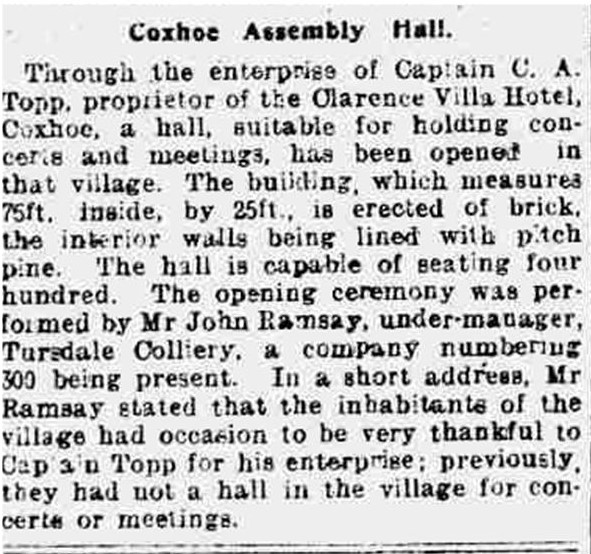
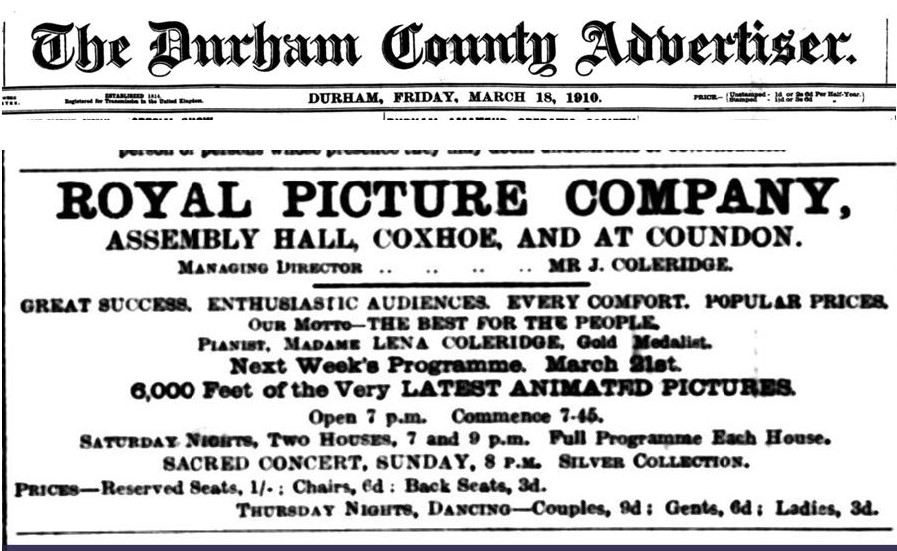
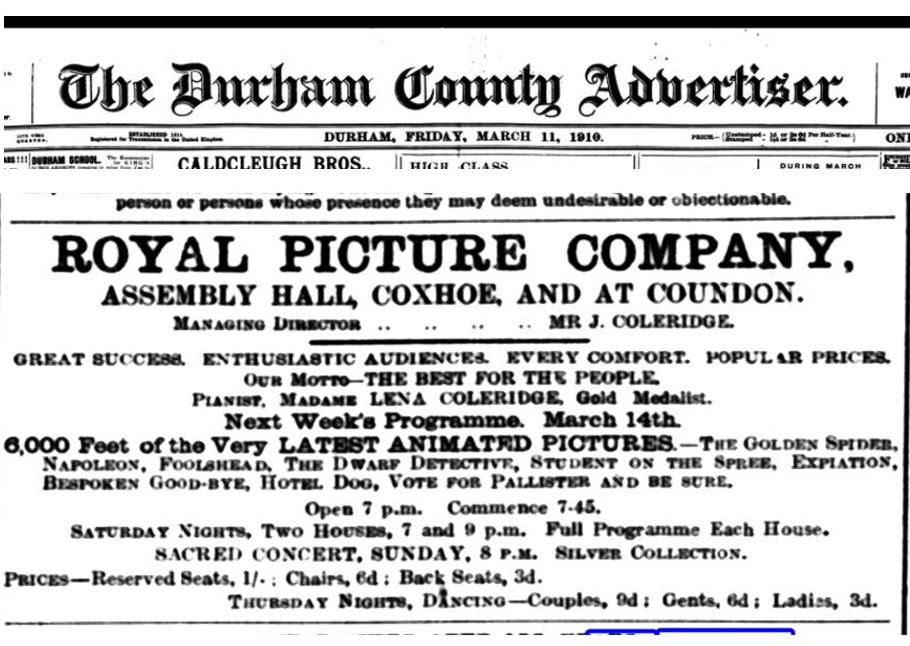
Early cinema programmes were shown around 1910 at the Assembly Rooms, Clarence Villas, Coxhoe adjacent to what is now the ‘Kicking Cuddy’ public house. Previous to this shows travelled throughout the district but the assembly rooms built in 1899 re-opened as a permanent base for films under the management of J. Coleridge and his wife Lena.
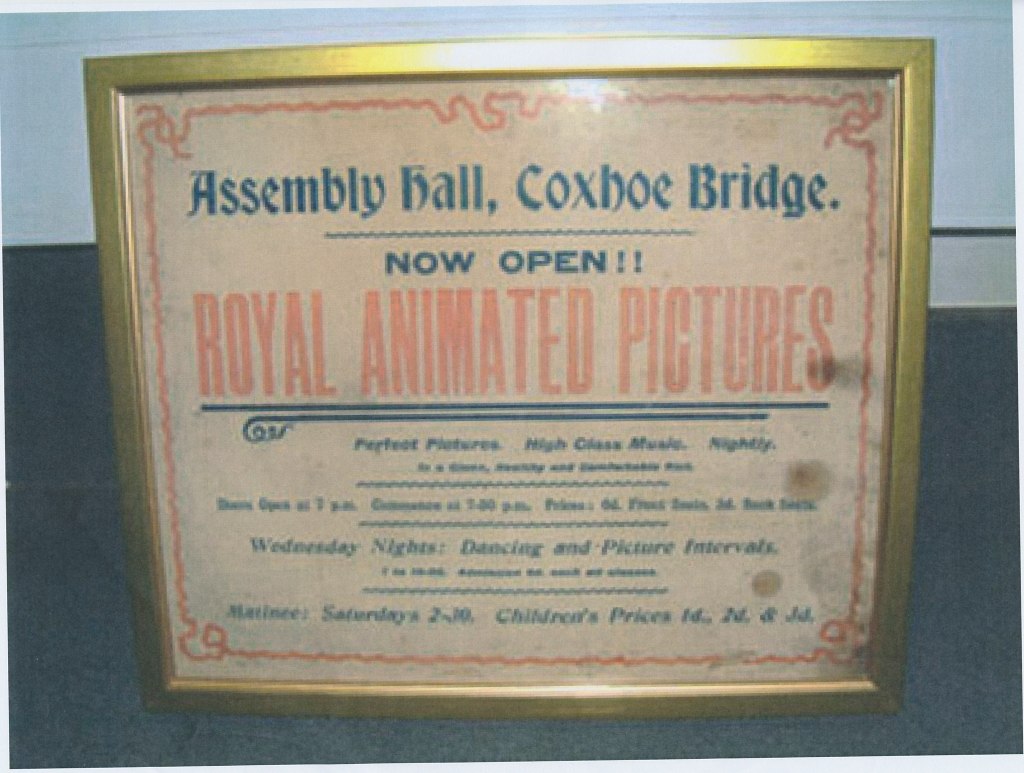
Silent films were part of a comprehensive evening’s entertainment with performances by Messrs. Barns and Sons, local comedians, illustrated slide songs by Miss Maude Coates and a selection of short, silent films- about 10 or 12 – which were accompanied on the piano by Madam Lena Coleridge formerly of the London Orchestra. Reserved seats cost 1 shilling, chairs were sixpence and back seats three pence. Wednesday’s were dance nights with films during the interval.
Local licenses for cinemas were stringent. Local magistrates controlled programme content and also cinemas opening and closing times.
Shortly after the Assembly Rooms opened the owners applied to hold Sunday shows. It was the local magistrates role to ensure that any films on Sundays reflected good moral values and while not necessarily religious they were to be sacred in nature. For a time any charges for Sunday shows were compulsorily donated to charity.
In 1911 the New Electric Theatre was opened at Commercial Street West, Coxhoe. It held 400 people and was immensely popular. Its proprietor was Gordon Gray.
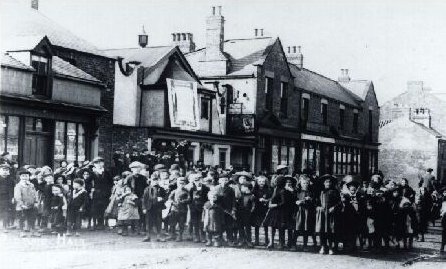
Its programme ran from Monday to Wednesday and changed between Thursday and Saturday. Charges in 1912 were sixpence and three pence extra for reserving a seat.
It’s exciting programme included westerns and comedies. A musical group named the ‘Acmes’ also performed along with an orchestra. Matinees were on Saturday afternoons and ‘moral’ films on Sunday evenings.
This theatre was later renamed and is best known as ‘The Gem’.
It is now the ‘Gem Café.
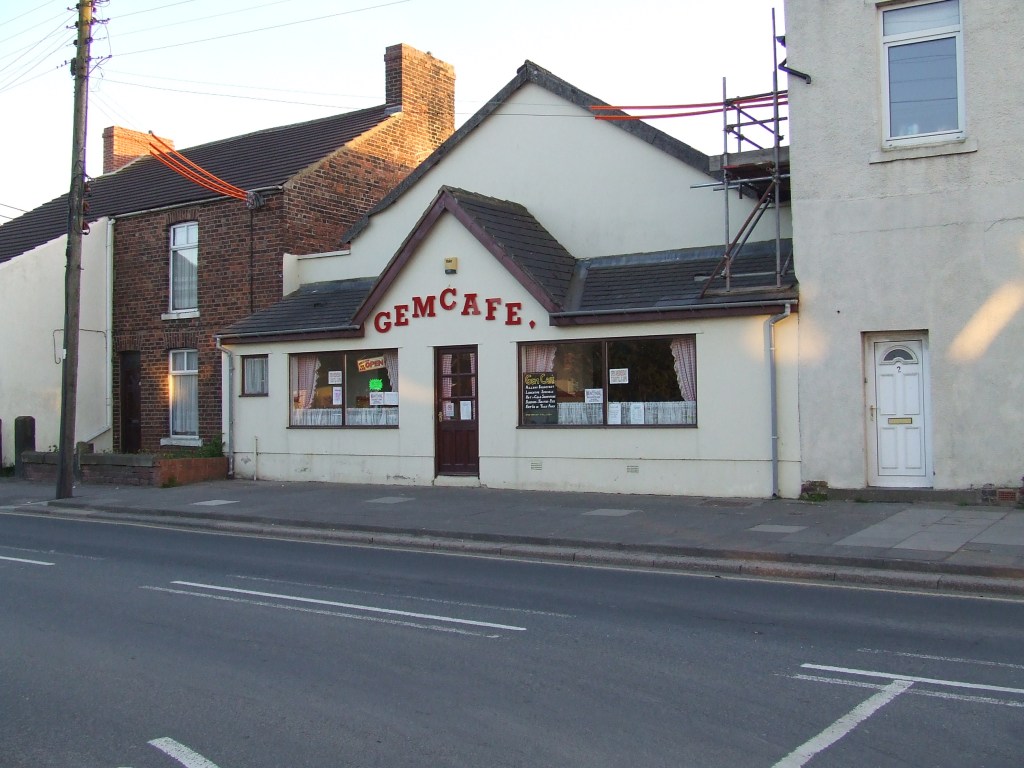
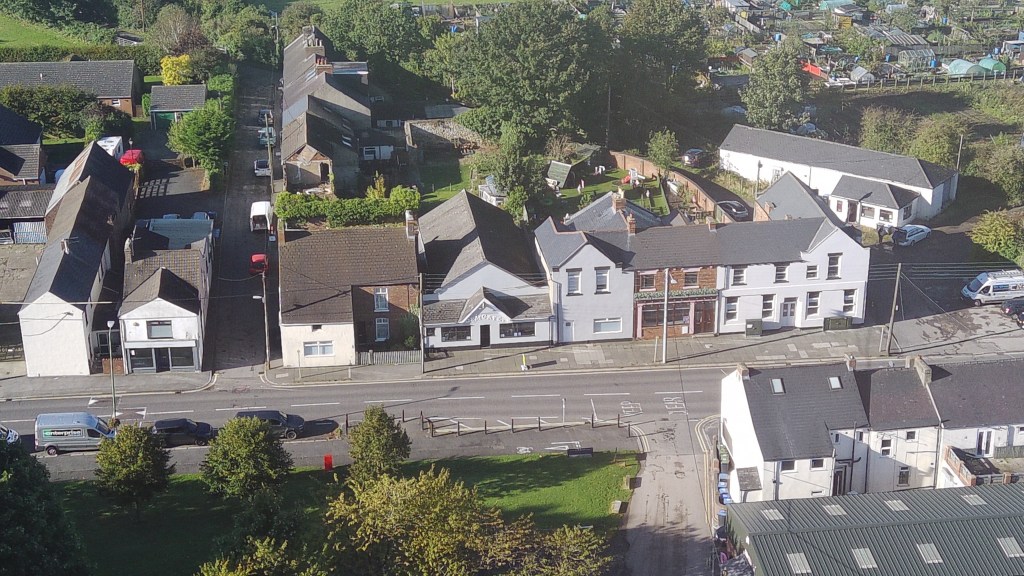
In 1928 the Iseton brothers, Fred and Thomas, from a well known Coxhoe family, applied for a license to open a cinema at Blackgate, Coxhoe. Their application was contested by the owner of ‘The Gem’ but the building of ‘The Avenue’ cinema was started in 1929. It was on the site previously occupied by the village blacksmith.
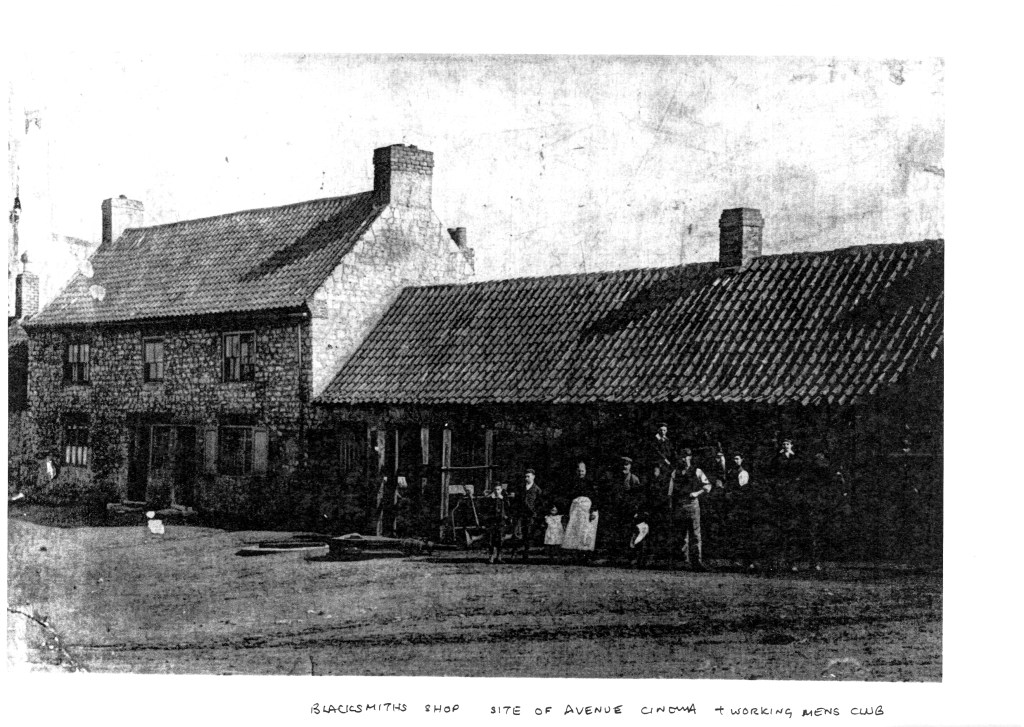
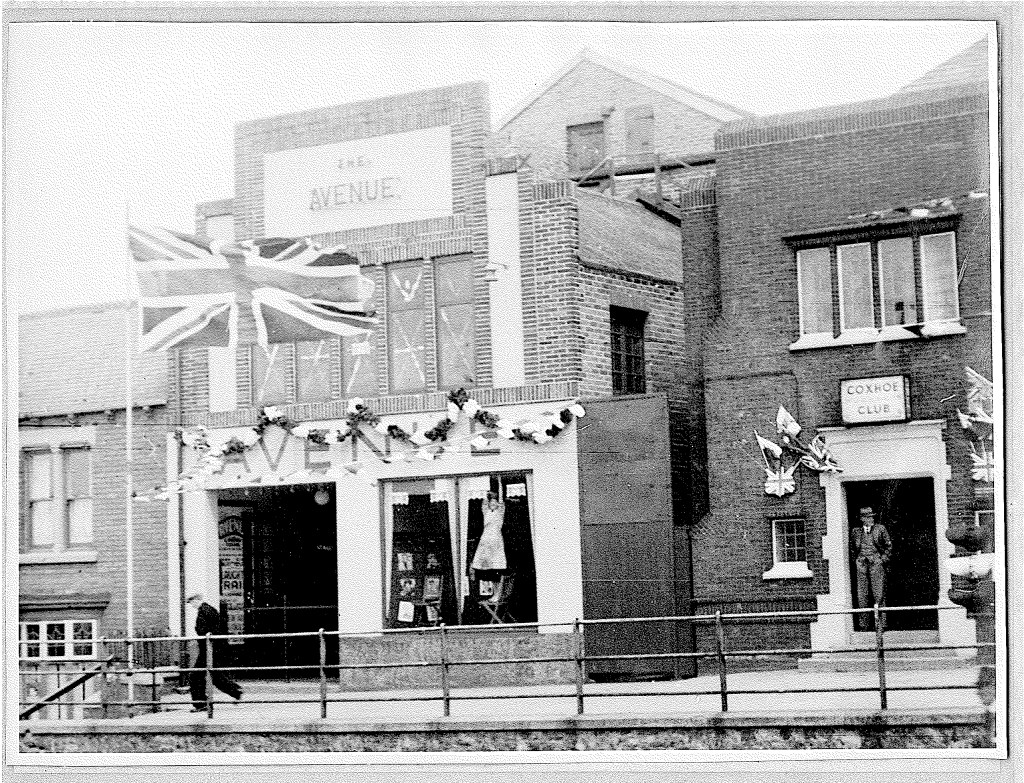
The first film ‘Love Never Dies’ was shown on Monday 24th February when the cinema was opened by Michael Wanless, a ninety year old resident of the village.
It had seating for 791, 526 on the ground floor and 215 on the balcony. The cinema attracted large audiences and in November 1931 Thomas Iseton was summoned to court for allowing a fire exit to be blocked with seating!.
Tommy Duffy of Victoria Terrace, Coxhoe recalls that his father, a local councillor and magistrate living at The Grove, Coxhoe, often attended showings in Durham to determine censorship and on occasions local proprietors contacted him for individual clarification.
The majority of the information is taken from an article ‘Cinemas in a Cathedral City’ by David H. Williams provided by Colin Sinderson. Many new angles developed when Billy and Marjorie Iseton recalled their memories.
Memories of Bill and Marjorie Iseton
Bill’s memories:
Bill is the son of Fred Iseton who jointly opened The Avenue cinema with brother Thomas. Williams claim s that ‘The Avenue’ was opened in 1930 but Bill insists it was more likely to be November 1929. “Talkies started in 1930 and for about six months ‘The Avenue’ showed silent films”.
He recalls the first audio film shown at ‘The Avenue’ and is amused to note that the talkie was ’All Quiet on the Western Front’! The sound for these films was on disc and this had to be synchronised to the projection belt. Lip readers soon determined when there was a problem with synchronisation!
Gordon Cutty provided the accompaniment as each silent film was accompanied by a musical score. Billy recalls the ‘Gordon Cutty Band’ as 2being more of an orchestra with trumpets, violins, drums etc. and all were able to read music too”.

Matinees cost a penny or tuppence and were normally the evening feature films. A special film was obtained when the evening film was inappropriate for children. They were held on Mondays and Saturdays, ceased during WW2 and never resumed. At Christmas time all children were gifted with sweets and oranges.
Bill also recalled the ‘sacredness’ of Sundays and stated films on that evening commenced at 8pm and finished at 10pm. Whilst they were not directly religious they were all non-violent in contrast to the swashbuckling weekday programme.
He says that films were not rented but a percentage of the gross – from 33 to 50% – was payable to the film company. British films were all charged at 50% regardless of quality – ‘profits were scant on British films’ says Bill. The best British films included George Formby and Gracie Fields. Bette Davies and Kathryn Hepburn were very successful film stars but ‘box office poison at Coxhoe’, says Bill. The Private Life of Henry VII starring Charles Laughton was popular in 1935.
The chauvinism of the times was evident in the films which were popular at Coxhoe. Any films with the word ‘love’ in it was unpopular at Coxhoe’ states Bill with emphasis. Classical films were often flops with Coxhoe folk. It was often the quality and status of the actors which was deemed more important that they theme with Clark Gable, James Cagney, Randolph Scott and Gary Cooper tops. There was an order of priorities allocating films to local cinemas – they had been around for some time before they reached Coxhoe.
Coxhoe’s ‘Avenue’ and ‘Gem’ cinemas shared newsreels – there was a ‘runner’ between the two venues. Bill recalls that some people booked seats for each of three weekly programmes.
Johnson’s bus waited outside ‘The Avenue’ for the evening to finish to transport visitors to Kelloe etc. Billy recalls that an early ‘winding boy’ was Herbie Dee – some of his relatives still live in Coxhoe. Billy remembers that ‘Nosey Turnbull’ owned the ‘Assembly Rooms’ beside the Cuddy. ‘Charlie Smith’ was owner of Smith’s shop “down the bottom of Coxhoe”. There were two shops just below the railway line going north. ‘Lingford’s was a chain of grocers shops selling flour and baking powder etc. (Bishop Auckland based) while Smith’s was a general dealers shop. Stan Ord worked there”.

Marjorie’s Memories
Marjorie lived most of her life in Coxhoe – The Avenue and Blackgate – but also lived at Quarrington Hill from 5-14 years.
Her first date was with Billy at ‘The Avenue’ on VE night 19145. She wondered why Billy was already in the cinema when she met him. She didn’t know of his background at that time.
She recalls the large queues waiting for ‘The Avenue’ to open. “Mr Iseton Senior kept an eye on the length of the queues”. The queue for the stalls started at the bottom of the steps to the north – if it reached the Police Station (now the dentists) he would advise them they were unlikely to obtain a seat in the stalls. “At that point we would scurry down to ‘The Gem’ to make sure we gained admission there”. The queue for the circle was in a southerly direction and if it reached the Bank the upstairs was full”. Later in life Marjorie worked in the kiosk selling sweets. “We always had a varied selection”. She remembers an old man called Carruthers who always purchased Jelly Babies. She also sold ice creams during the interval. The usherettes helped to keep good order and shone their torches on anyone who misbehaved.

Do you have any memories connected to the cinemas at Coxhoe? Or do you recognise anyone on the photographs? If so, we’d be pleased to hear from you.
Excerpt from ‘Treasured Memories of Doris Taylor (nee Marr)
‘Then came Saturday when we would go to a matinee at the Gem Cinema. Two pence got us into the pictures and a packet of monkey nuts. We were nearly killed in the rush trying to get into the matinee. Just got to the exciting bit in the film where they were falling over the cliff, then –CONTINUE NEXT WEEK – would come up. Roll on next week. Mr Bailey was the manager of the Gem and Mrs took your penny. If you felt a bit posh, you went upstairs – so bang went your monkey nuts.’
Barbara Hepplewhite (nee Stockell)’s Memories
It would be around 1958 that I started going independently as a young teenager to the cinemas – I can’t remember going to before then with my mum or family.
Both the Gem and Avenue were open at that time and they played a major part in the social life of young people – the place to meet both girl and boy friends.
I remember queuing for entry at the ‘Avenue’ and the film that immediately comes to mind is ‘Tommy the Toreador’ starring Tommy Steele, one of my favourite ‘pop stars’(and still is). Sitting in the Balcony always felt very special.
The Gem was the place I first tried smoking cigarettes. My friend and I bought a packet from Panico’s (now Laings) between us but a neighbour saw me smoking, told my mum and I can’t remember ever buying any again.
There was also a cinema at Bowburn and we used to walk there and back – it was particularly popular with ‘courting couples’ for its double seats.
Harry Carr worked in the projection room in The Avenue Cinema
Harry remembers the show was made up of:
“The Little Picture” – this movie was about an hour’s duration, often known as the B movie, usually these were Westerns (there were lots of cowboy movies)“The News” – world wide and local news.“The Big Picture” – this was the main movie and had stars like Tony Curtis, Marilyn Munro, Debbie Reynolds, generally included the more famous actors. Sometimes there was an extra called “The Pathe Pictorial” – including world wide and local news. Coxhoe Avenue and Gem shared Newsreels.
A favourite of mine was the 10 Commandments.
In the Interval at The Avenue Coxhoe, we used an old 78 record to play during the intervals – the Elizabethan Serenade – it was the only one and it was so worn out from all the years of being played.
We also showed the local adverts with the slide machine. It was important to get the slides the correct way round or Fred would ring upstairs and tell you to change it round.
He says ‘One of my best memories is walking home through The Hall with my friends who also worked at the Picture Houses. Depending on what movie had been playing we’d act out the movie – running round making Tarzan noises was a favourite.
 Coxhoe Local History Group