
(Copyright Coxhoe Local History Group)
In the beginning……. Part One in which we take a look at the development of the Methodist Movement in Coxhoe.
Methodism ( in the form of the Primitive Methodist Church) first came to Coxhoe early in the 19th Century. In September, 1838, ( the year of a great revival) Coxhoe’s Primitive Methodists numbered 35, having apparently before that been based in Quarrington Hill.
Records show that preaching services were held once a Sunday (10:30 am) at Coxhoe after June 1837. Later in the year it was changed to an afternoon service. We believe that, although those first Primitive Methodists were associated with Quarrington Hill, the Coxhoe element grew so much that it, rather than Quarrington, became the name and meeting place of the society.
By 1839, the Coxhoe Primitive Methodists had bought a place to be used as a chapel. It cost £214 & 11 Shillings, and a further £64 & 4 shillings was spent on re-modelling the interior and installing new windows. From records of the work done, it is clear that the ‘Prims’ had turned a cottage (or possibly two) on Foundry Row into their first chapel.
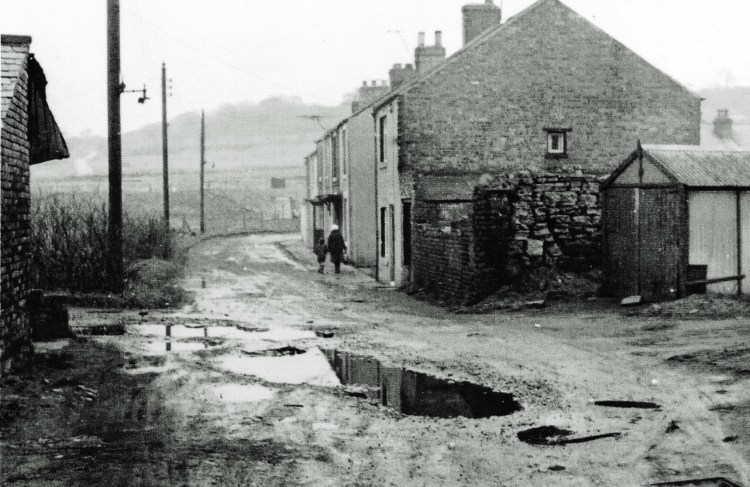
The chapel held 300 people, 120 in pews (for rent) and 180 in free seats. On weekdays the building was used as a day school.
There were 40 members when the chapel opened in December 1839, but by 1864, the chapel was very active. Membership was then 47, and these were the core of the society, meeting on weekdays as well as on Sundays. Around 300 people were estimated to attend the main service on Sundays. Imagine 300 people worshipping in a couple of cottages made into a chapel! It must have been very lively. The Primitive Methodists’ love of singing and revivalist preaching would make its mark and perhaps account for the popularity of the services.
The Sunday school, too, was popular. There were 140 scholars and 18 teachers.
With all these people on the premises it was time to build a new chapel. So, the first of several of Coxhoe’s main buildings was put up. At the time Coxhoe was a booming little place, The 1,500 population population of the 1850’s reached 2,00 by 1865, and by 1875 this was reach nearing 4,000. The village was home to several industries (brickworks, foundry, pottery, quarry and collieries). Altogether, the time seemed ripe for building a Primitive Methodist Chapel (1865), founding a Parish Church (1868), a Co-operative Store (1870), and a Wesleyan Chapel (1871).
The foundation for the new chapel was laid at Easter, 1865. It was on the west side of the main road, and was probably on its own at the time, but it was soon joined by the Co-op. and other buildings. The chapel was not opened until 1866 – apparently a gale blew the roof off and delayed the opening. The story is told that, when setting up tea tables for the opening day celebrations, members had to improvise somewhat because the workmen hadn’t finished, and some of their tools and materials were still lying around.
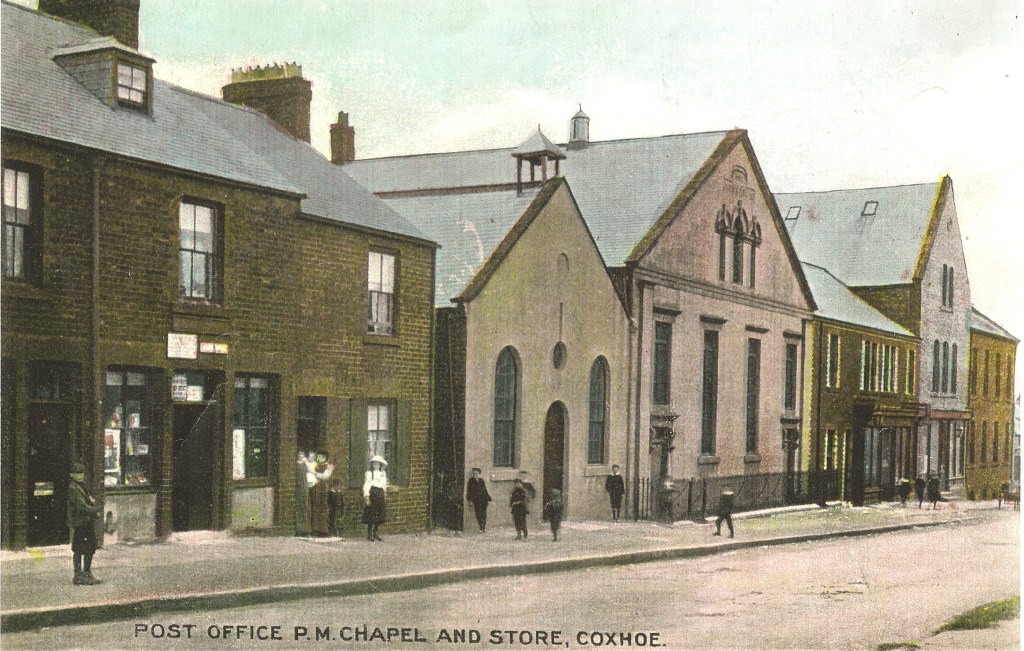
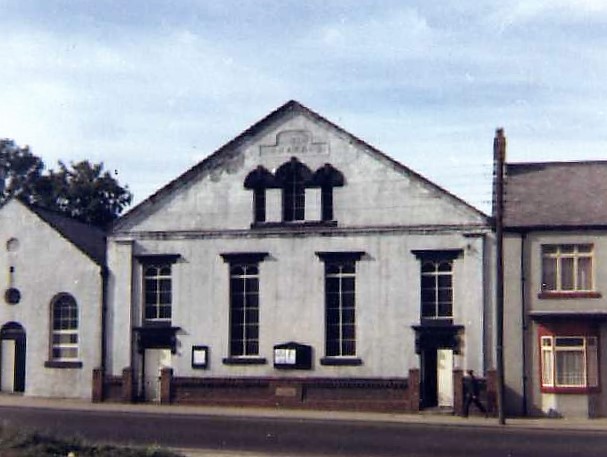
The new chapel (pictured above) cost £646 – 11/- 1d. The new building provided a stimulus for the society, since there was a dramatic increase in membership from 53 (when it opened) to 97 by the end of the year. For the next few years, the Anglican Church and the two chapels flourished. Sunday worship was well attended, and there were active Sunday Schools and Day Schools.
Unfortunately, there was a great depression in the coal industry in the 1860’s and 1870’s. People were forced to move from village to village to seek work as mines were sunk and then closed very quickly as the coal resources ran out or were of poor quality. The population of Coxhoe dropped from 3,000 in 1876 to 1,000 in 1878 and there were similar dramatic reductions in the number of worshippers.
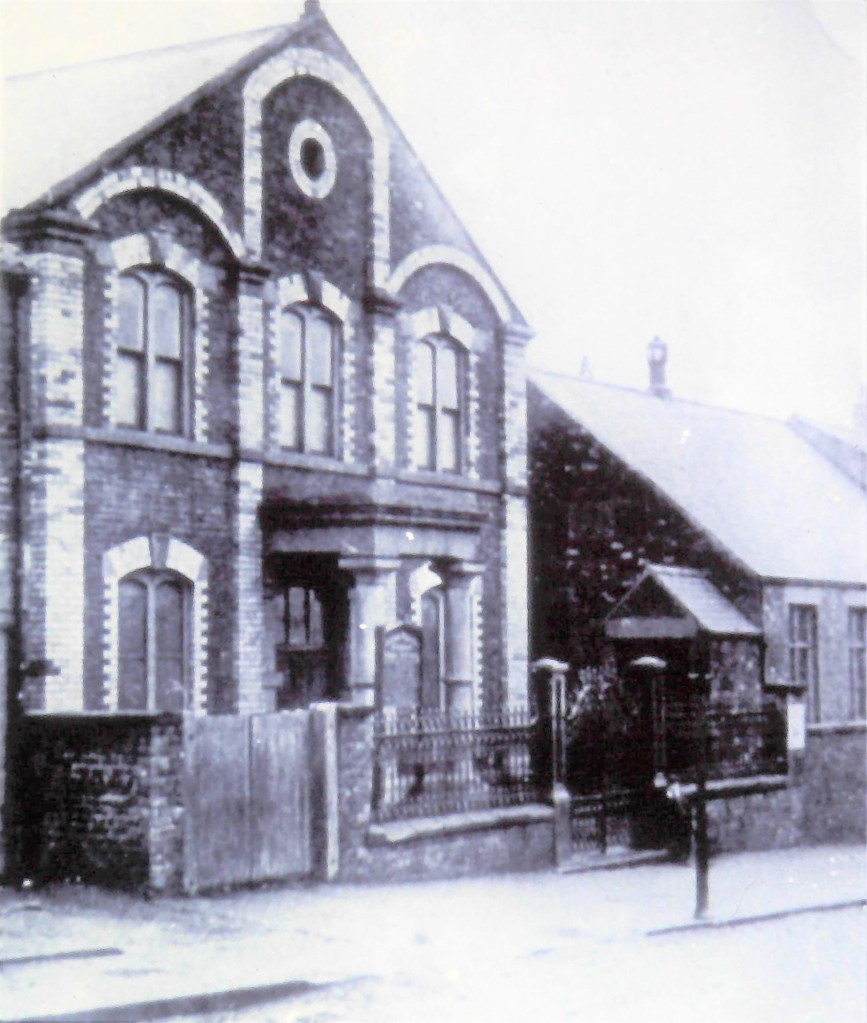
By the end of the 19th Century things were looking brighter again. Numbers ( of both worshippers and members ) were steadily climbing, and with no television or radio, the chapels seem to have been the principal source of entertainment in the village, mounting a wide range of concerts and bazaars.
During the second decade of the twentieth century the shadow of the first world war loomed rather darkly over the scene, with reports of men being killed. Special efforts such as ‘Allies Concert’ were held. Certainly the War marked a period of change in the life of the chapels. They still flourished, but in a different way. new institutions and practices came into being and some of the old ones fell away. For example, no Love Feasts were recorded on the Plans, while Camp Meetings didn’t seem to last much beyond 1930. Membership of the chapels remained high, even though there was some decrease in numbers.
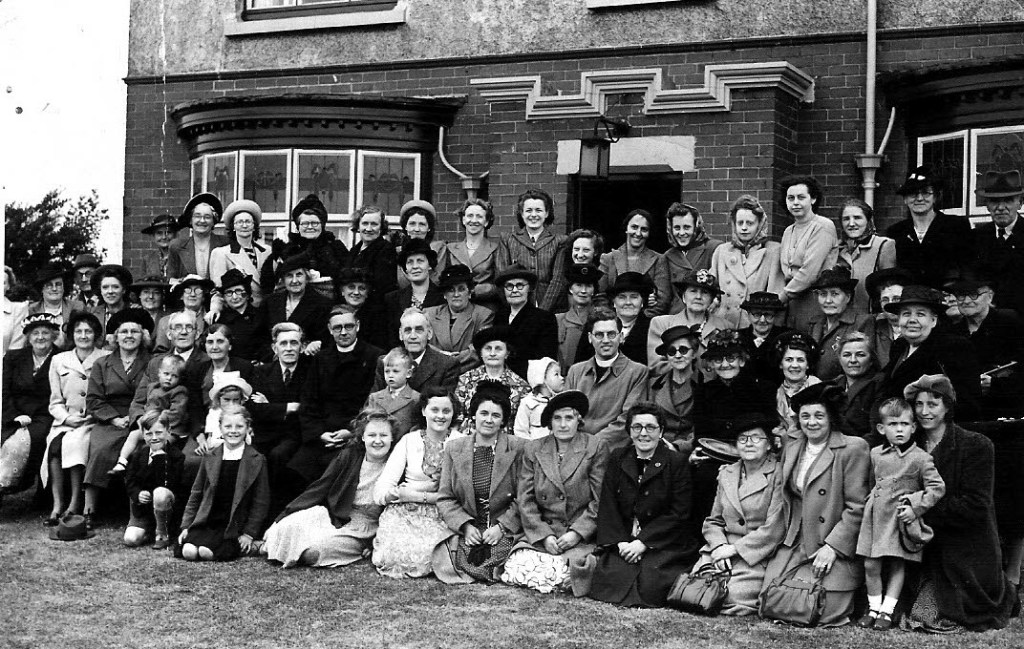
Although during the period 1920-30, the membership was mainly female, men dominated most areas of leadership in the chapels. Trustees, Sunday School Teachers, Stewards and Preachers were invariably men. So what did women do?
No doubt they made the the teas and worked hard at fundraising. There were a few female Sunday School teachers; and the Poor Stewards (Communion Stewards) were usually women. There were one or two lady Class Leaders in 1935, but we to conclude that, in those days, women played a secondary role in the official life of the chapel.
Nevertheless, women began to develop their own organisations and contributed much to life of the chapels. A sisterhood began around 1922, and by 1926 was celebrating its Anniversary. The Women’s Missionary Auxiliary began in the same period. Women served in the choirs, and took part in the oratorios, concerts and dramas which were produced in the chapels from time to time. If women were not able to contribute much to the official life of the two chapels, they certainly played a great part in the real life and activity of the societies.
In Part Two we’ll look at how the two chapels came together to form one Methodist Church in Coxhoe.
 Coxhoe Local History Group