
(Copyright Coxhoe Local History Group)
“Religion in the late 19th and early 20th centuries was a powerful force which cut across barriers of social status and wealth. “Norman McCord ‘North East England 1760 – 1960”
In the early 1800s when Coxhoe was a small hamlet it had no building dedicated to religion. The village was divided into two parishes –Bishop Middleham to the west side of the turnpike road and Kelloe to the east.
1838
The Primitive Methodists purchased two cottages at Foundry Row for worship and as a day school, although they had existed before this date.
1840
Coxhoe’s first Wesleyan Chapel, with day and Sunday School, was built at Wesley Place.
1859
The Temperance Hall was built at the west end of Foundry Row.
1865
“Coxhoe was constituted a separate parish… formed out of the two parishes of Kelloe and Bishop Middleham”. F Whellan 1894.
Anglican “Services were held in a miner’s cottage then in the Temperance Hall”. from A History of Coxhoe- by Robin Walton
1866
A new Primitive Methodist Chapel was opened, known as the Central Methodist Chapel
F. Whellans, 1894 describes it as “a plain brick building with cemented front, built in 1865 at a cost of £355 and will seat 230. Adjoining is a good Sunday School erected in 1871”.

1866
Coxhoe’s first Roman Catholic chapel, dedicated to Our Lady and St. Patrick, was founded in the two dwelling houses in Foundry Row formerly used by the Primitive Methodists.
Roman Catholics had previously been served by the church at Sedgefield or the new church at Trimdon from where Father WK Farmery ministered to the people of Coxhoe.
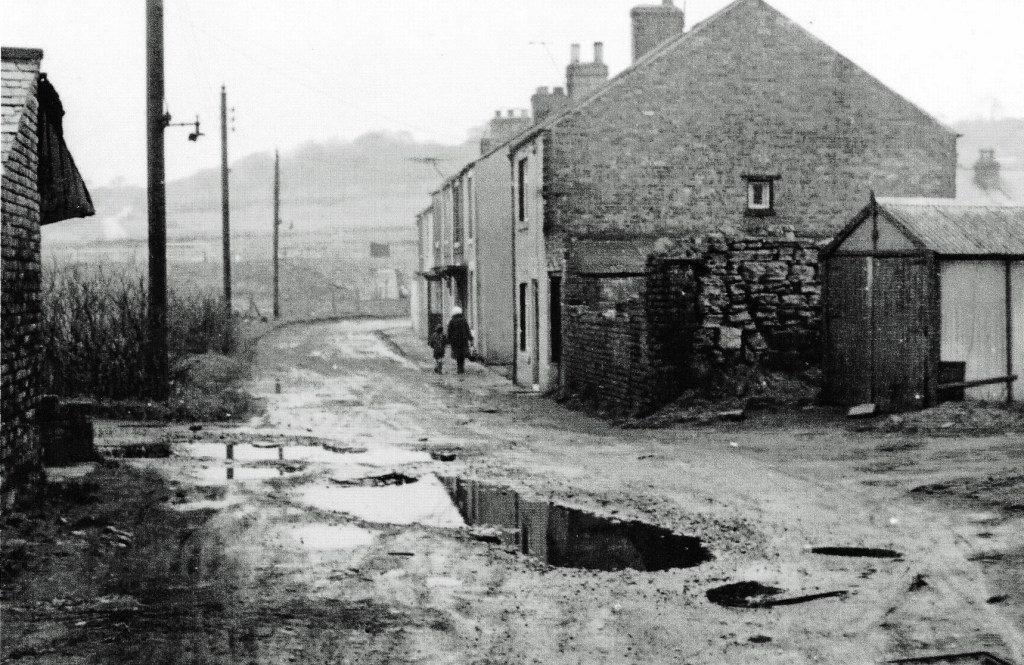
Foundry Row, (pictured below) no longer standing, was at the heart of Coxhoe’s religious heritage. Anglicans, Primitive Methodists, Roman Catholics, Salvationists and Temperance Society all met in that area at some time in their development.
1868
St. Mary’s Anglican Church was opened.
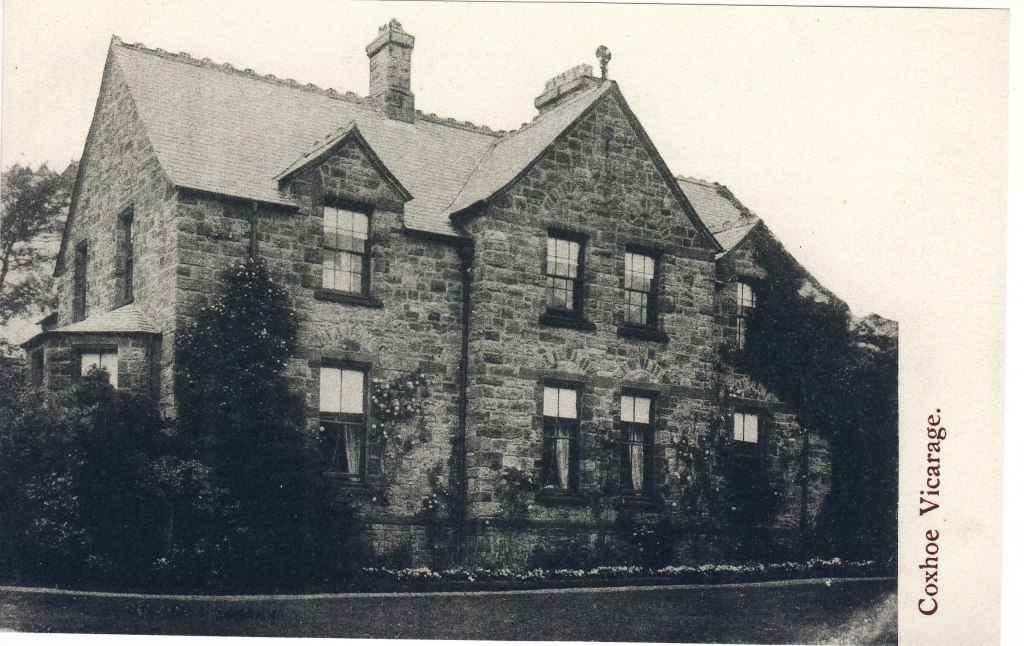
“The church, which stands within a burial ground on the west side of the road is a stone building in the Gothic style with ornamental east window ….. It was erected in 1868 at a cost of £2,500 and will seat 460. The living, a vicarage, is valued at £300, with house …. Vicar Rev. David Fleming B.A.. The vicarage is a fine house of stone situated about half a mile from the church.” F Whellan 1894
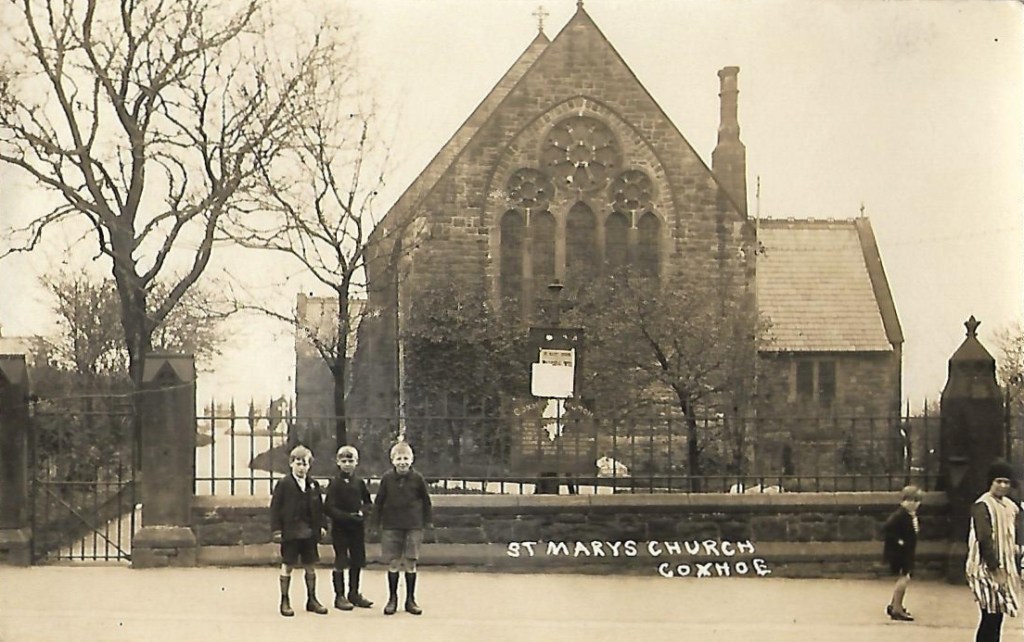
The exterior of St. Mary’s was built from local stone (Cassop) and it has a number of fine features – Mouseman’ Thompson’s woodcraft, the east window is a memorial to those who died in the Great War and there are many memorials to churchgoers and prominent villagers e.g. Clara Wood of Coxhoe Hall.
1871
A new Wesleyan Methodist building, named St. John’s was erected in the village centre . It was described by Whellan as “an imposing brick building in Italian style, with massive stone portico and ornamental front…. at a cost of £800 and will seat nearly 400 people!” A Sunday School was added in 1894.
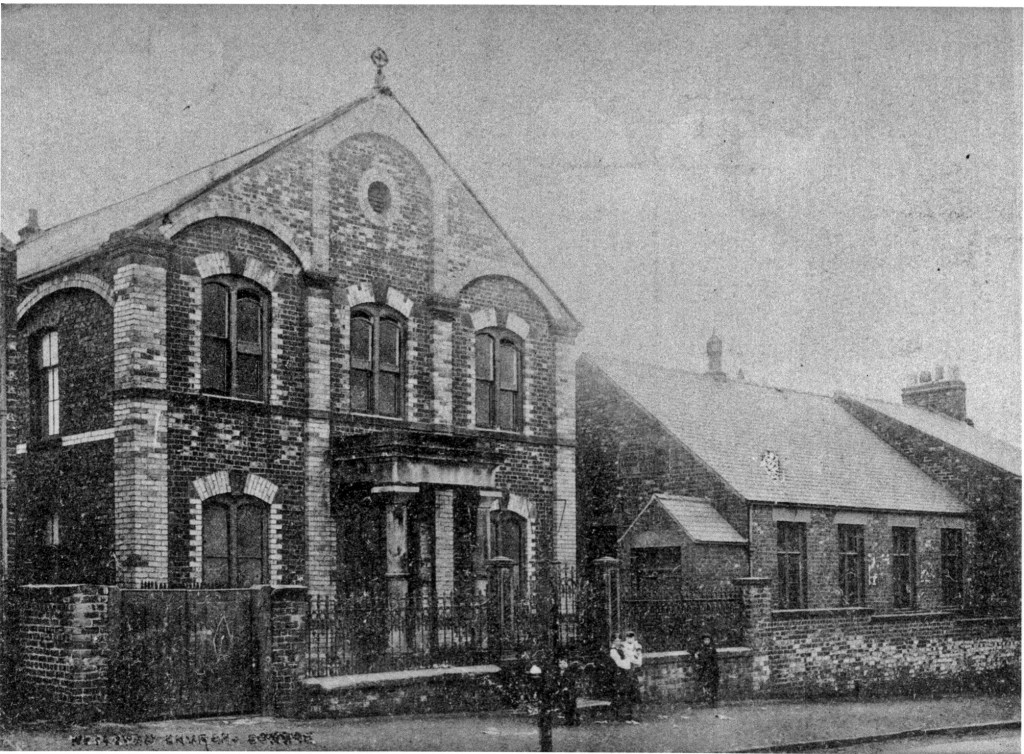
The Central Methodist Chapel closed and St. John’s was adapted to form St. Andrews Church in 1964 when Coxhoe’s two Methodist churches amalgamated. This was replaced with a new building in 2008.
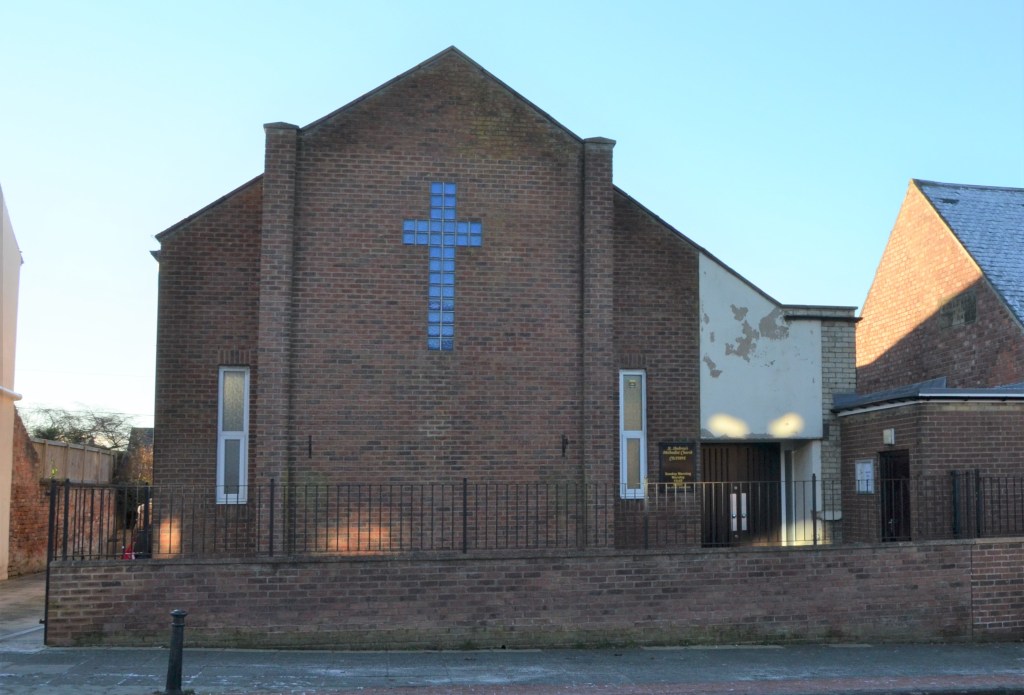
The early closure of the village’s coal mines had affected the village’s population. Grand plans to build large churches were affected by this trend – St. Mary’s Church had a planned capacity (pre1868) of 700. The actual capacity was 458, Primitive Methodist Chapel membership in 1873 was 126 – in 1879 it
1875
An influx of people from Ireland increased the Roman Catholic congregation. As a result the Catholic Chapel at Foundry Row was closed and a new church, St. Patrick, St. Joseph and St. Cuthbert was consecrated at West Cornforth to serve Roman Catholics of West Cornforth, Coxhoe and Kelloe.

The West Cornforth building was demolished due to mining subsidence and the Roman Catholic Church of St. Joseph’s was built in Coxhoe in 1966.
In the late 19th and early 20th Century the Salvation Army had much to do in Coxhoe. Formed nationally in 1865 by William Booth it worked to help the poor and preach the Gospel to them.
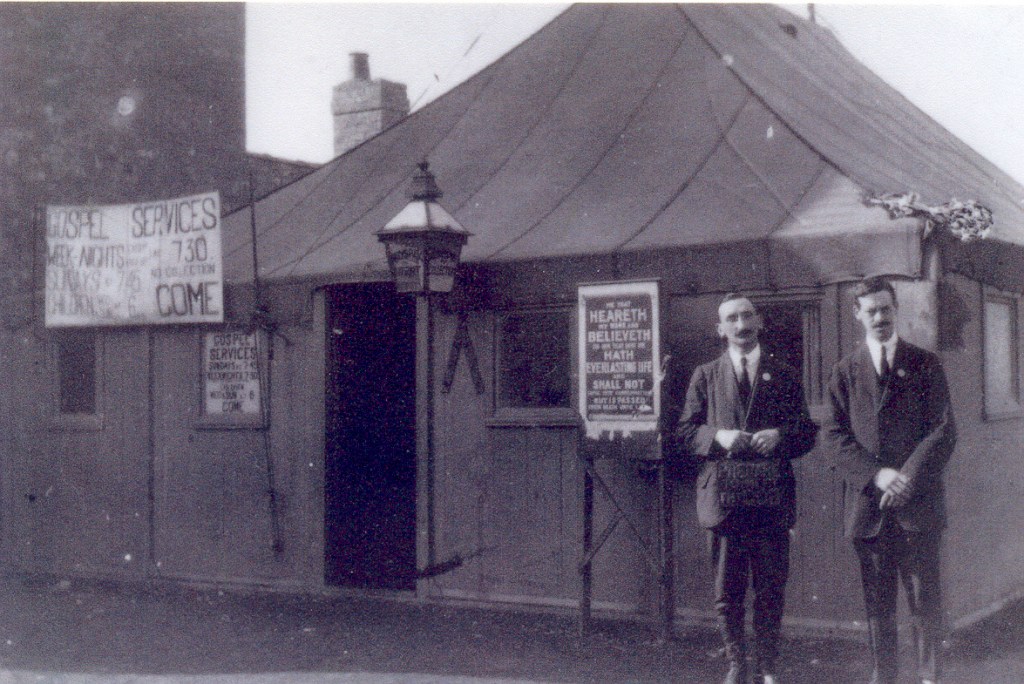
They first met in the Temperance Hall at Foundry Row then moved their meetings to ‘The Tabernacle’, a tent close by. Later they moved to a NISSEN hut to the rear of Panico’s shop opposite West Parade.

The photograph shows a soup kitchen adjacent to their hall with West Parade in the background. The Hall was closed in 1939 and Coxhoe’s Salvationists now worship at the West Cornforth Citadel.
1921
Two Evangelists from the Plymouth Brethren, Foggarty and Linton travelled around Durham County. Initially they ministered from a tent at Cornforth Lane. This was replaced by an ex army hut in 1922 became known as the Gospel Hall and closed in 1964.
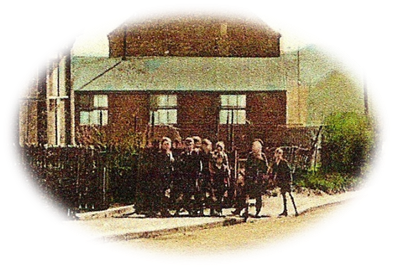
The Industrial Revolution provided many challenges to society and churches but marked the heyday of religious participation. The influence of our churches was profound and enduring. Coxhoe’s rapid growth demanded a sense of community.
The churches responded.
Long before education was compulsory in 1870 local children accessed education in local churches. Many children are recorded as scholars in the Census returns of 1841. At one time in the 1870’s the Central Methodist Church Sunday school had 140 pupils and 18 teachers.

While mining communities could contain ‘ungodly folk’(McCord) the churches and chapels provided community leaders in many fields including politics. The members of our churches and chapels were sincere and devoted. The good example they set influenced others.
Men worked long hours, women often had large families and homes were often crowded with basic living conditions. Life was uncertain at home and at work. In these times of adversity Coxhoe’s churches offered purpose and consolation.
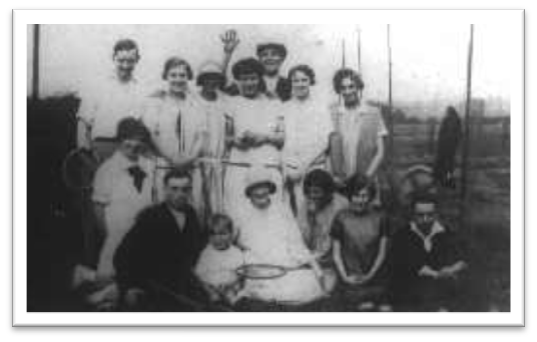
Reproduced by permission of Durham County Record Office Ref: D/Cl 27/278/411
The churches provided sisterhood, women’s missionary, Mother and Craft clubs, music, sporting, drama, dancing, recitations, entertainment, scouts, guides, boy’s brigade and youth activities. Families went on church excursions which were a real treat. Their contribution to community cohesion was significant.
 Coxhoe Local History Group